
In Plain English: An overview of ingredients. What we make our soaps and cosmetics from.
The label on a soap usually carries a list that tells most people nothing at all. Latin plant names, sodium salts, the odd oxide. It looks like a code, yet it's simply a recipe written down very precisely.
Every ingredient in our recipe has a name, an origin and a reason. This article is mainly about the third. In it you'll find an alphabetical index of the ingredients we work with in the soap workshop, and for each one its name from the label, where it's used and the answer to the question of why it's in the recipe at all.
It's a living document. As recipes and ingredients are added, the index grows too.
How to read an ingredients list
INCI is the international nomenclature of cosmetic ingredients. Thanks to it, the same ingredient has the same name in Prievidza and in Lisbon, so olive oil is Olea Europaea Oil everywhere, whatever language the rest of the packaging is in. So it isn't jargon meant to scare you but quite the opposite: a shared vocabulary, so that ingredients lists can be compared across countries.
One thing, however, regularly confuses label readers. On a finished soap you won't find oils under their original names but in their saponified form: Sodium Oleate instead of olive oil, Sodium Cocoate instead of coconut oil, Sodium Sheabutterate instead of shea butter. It isn't a trick. It's a consequence of the fact that the oil in a soap is no longer oil. During saponification it went through a chemical reaction and became the sodium salts of fatty acids. We've gone into this in detail in the article What is saponification and what role does it play in making soap?.
That's why the same oil appears in the index sometimes as Sodium Cocoate and sometimes as Cocos Nucifera Oil. What decides it is whether or not it is saponified in the product in question.
Why there's another list under the scent
On the label, the essential oils are followed by a line of names that looks like something extra that's been added. The ones you'll see most often on our labels are limonene, linalool, geraniol, citral and citronellol, plus eugenol, farnesol, benzyl benzoate and benzyl salicylate.
They aren't added synthetic substances. They're natural components of the essential oils themselves and are among the fragrance allergens monitored by legislation, so above a certain concentration they have to be listed by name on the packaging.
So a natural scent isn't automatically a scent without allergens. It's a scent where you know exactly where it comes from.
Why a herb darkens in soap
A plant ingredient in soap darkens over time. It isn't a sign that the soap has gone off but the natural behaviour of a dried plant in an alkaline environment, where its own pigments react and change.
That's exactly why we put some herbs into soap and not others, even though they look better in a photo. And that's exactly why the colourants in our soaps are mostly mineral: what looks beautifully purple in a cup of tea ends up grey in a bar.
Ingredients we also sell on their own
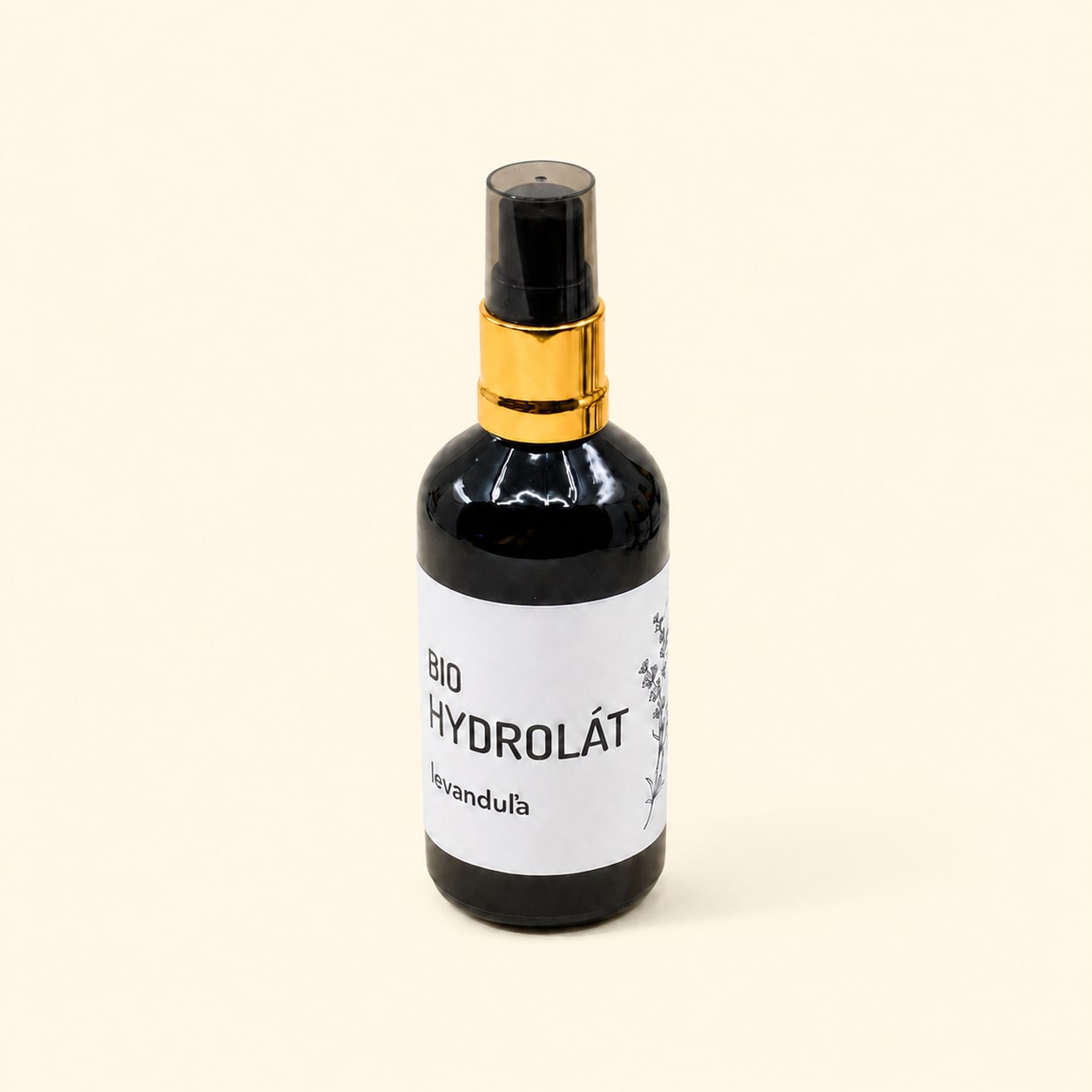
This is a distinction worth explaining, because it's easy to mix up. Our range also includes single-ingredient oils and butters, hydrosols and essential oils.
Don't look for a hydrosol in a soap's ingredients list; it doesn't go into soap. With oils and essential oils it's different: they're both at once. We sell them in bottles and at the same time build serums, butters, balms and soap scents from them. That's why they have their place in the index, and each entry states where it belongs.
Ingredient index from A to Z
Activated charcoal
Charcoal · soaps
A fine black powder that gives soap a deep dark colour and at the same time acts mildly on the surface of the skin. Combined with a white soap mass, it creates a contrast that needs no other colourant.
Almond oil
Sodium Almondate · soaps
A light oil with a high proportion of oleic acid that softens the character of the soap in the recipe. It appears in several of our bars, although you probably know it better as an oil in a bottle.
Apricot kernel oil
Prunus Armeniaca Kernel Oil · oil serums, body care
An oil from apricot kernels, close to almond oil in its profile. It absorbs quickly, which makes it a welcome ingredient in products that should be finished the moment they're applied, not sticky.
Argan oil
Argania Spinosa Kernel Oil · oil serums, body care
An oil from the kernels of the Moroccan argan tree, rich in unsaturated fatty acids. We work with both the deodorised oil and the lightly roasted one, which has a more pronounced nutty scent. It's one of those oils a recipe is built around, not one it's topped up with.
Avocado oil
Persea Gratissima Oil · oil serums, body care
A thicker, more nourishing oil with a characteristic colour. It suits products that are meant to stay on the skin for a while and do something there, not disappear immediately.
Beeswax
Sodium Beeswax (soaps) · Cera Alba (balms) · soaps, balms
The only raw material of animal origin that we use. It's added in small amounts and affects the hardness and texture of the result. It's precisely because of beeswax that, when you're looking for a vegan soap, what always counts is the ingredients of the specific bar, not the brand as a whole.
Black cumin seed oil
Sodium Nigella Sativa Seedate · soaps
A distinctive oil with a spicy scent that's impossible to miss. That's exactly why it's dosed with care. Its character has to be a deliberate part of the recipe, not a surprise.
Borage oil
Borago Officinalis Seed Oil · oil serums
An oil from borage seeds with a high gamma-linolenic acid content. It's one of the more delicate oils, so it's used in small amounts and where it really has a reason to be.
Calendula, petals
Calendula Officinalis Flower · soaps
Orange petals that are exceptional in soap making for one thing: they hold their colour in an alkaline environment better than most other flowers. That's why you can still see them in the finished bar.
Castor oil
Sodium Castorate · soaps
The quiet workhorse of the recipe. It has a high ricinoleic acid content, and in soap it supports the formation and stability of lather, so the lather isn't just rich but also creamy and long-lasting. A little is enough. If you left it out, you'd notice straight away the first time you washed.
Cetearyl alcohol
Cetearyl Alcohol · conditioners
Despite its name, it isn't the kind of alcohol that dries things out. It's a fatty alcohol whose function is emulsification, and in a conditioner it helps bind the water and fat components together.
Citric acid
Citric Acid · soaps
In soap it's used as a chelator, a substance that binds calcium and magnesium ions from hard water. Thanks to that, less unsightly film forms on the soap and on the washbasin, and the soap lathers better where the water is hard. In cosmetics with a water phase, it also serves to adjust the pH.
Clays, cosmetic
Montmorillonite · Kaolin · soaps
Clays play a double role in soap: they bring their own natural colour and at the same time change how the soap behaves when you wash. In ingredients lists you'll find them under the names of the clay minerals they're made of — montmorillonite in green clay and kaolin in blue.
Cocoa butter
Sodium Cocoa Butterate (soaps) · Theobroma Cacao Seed Butter (balms) · soaps, lip balms
The butter you know from chocolate has a very practical role in soap. It's solid, so it adds firmness and durability to the bar. It's also at work in lip balms, where it isn't about saponification but about helping the balm hold its shape. We use it deodorised so that the scent of cocoa doesn't mask the scent we compose deliberately.
Coconut oil
Sodium Cocoate · soaps
If olive oil gives soap gentleness, coconut oil gives it strength. Thanks to its high proportion of lauric and myristic acid, it contributes to the hardness of the bar, its cleansing ability and a rich, bubbly lather. For soaps we use the refined kind. It's the most common oil of all in our recipes, and without it soap would wash reluctantly and lather lazily.
Coffee, ground
Coffee · soaps
Coffee grounds are an ingredient you feel in soap rather than see. They turn a bar into an exfoliating soap, and in the bathroom they have their own logic: morning, not evening.
Cupuaçu butter
Sodium Theobroma Grandiflorum Butterate · soaps
A butter from a South American tree related to the cacao tree. It's softer than cocoa butter and binds water very well. You'll recognise it on the label by the longest name in the whole ingredients list.
Dog rose, flower
Rosa Canina Flower · soaps
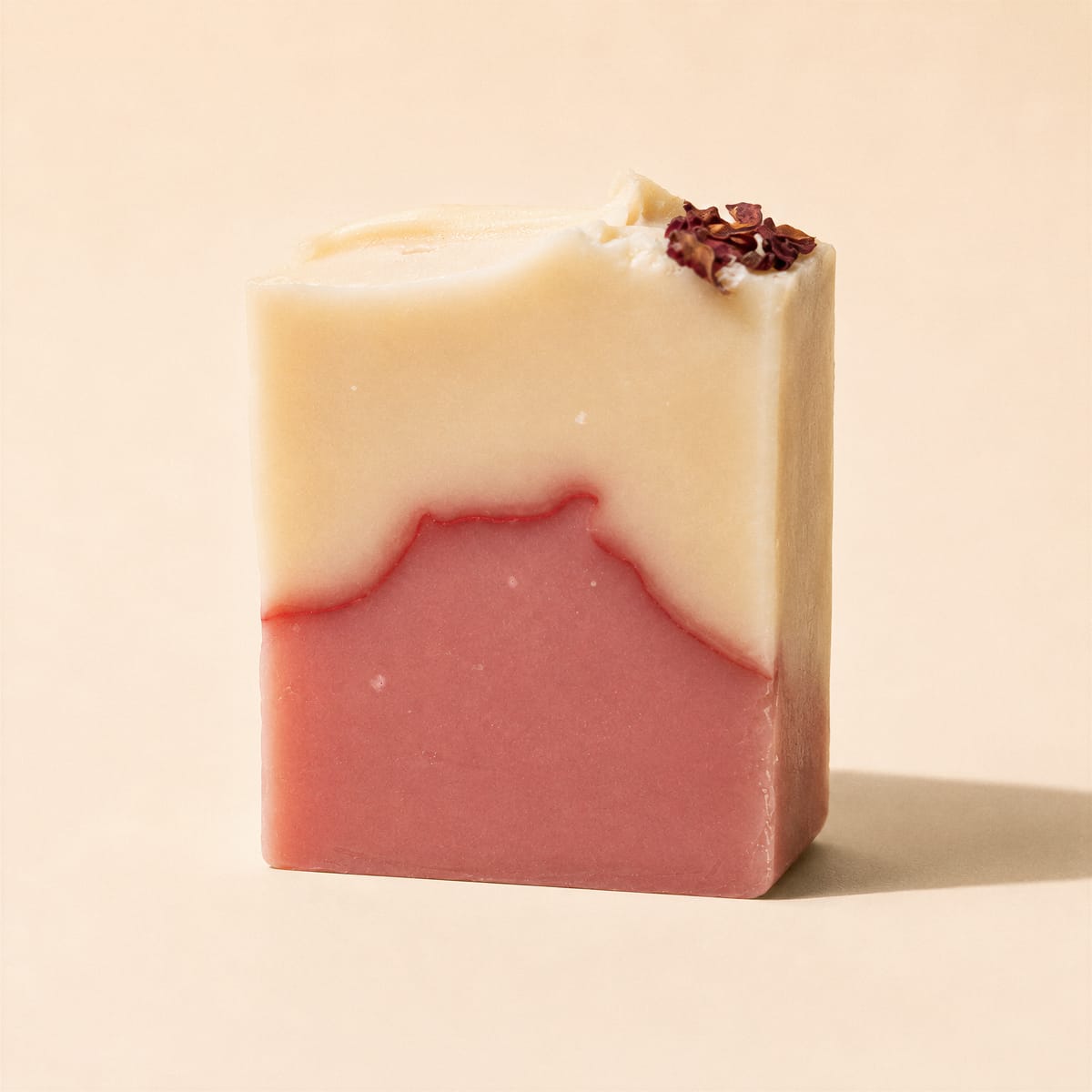
The dried flower of the dog rose. It's used mainly on the surface of the bar, where it stands out, rather than in the soap mass, where it would darken.
Elderflower
Sambucus Nigra Flower · soaps
A tiny pale flower that gives soap an unobtrusive, almost powdery texture instead of distinct pieces. It also appears in ingredients lists as a flower extract.
Essential oils
botanical plant names · soaps, sold on their own
We compose a soap's scent from essential oils obtained by distilling or pressing plants. It isn't the easier route: in an alkaline environment every essential oil behaves differently, some fade during curing and some change. So the composition is built with an eye on how it will smell in a month, not how it smells in the bowl. Among the florals you'll find lavender, geranium and ylang-ylang; among the citrus oils grapefruit, bergamot, lemon, orange, lime and mandarin; among the herbs mint, sage, rosemary, thyme and coriander; among the woods cedar, pine, fir, cypress, juniper, patchouli and sandalwood; and among the spices cinnamon, clove and star anise. Plus litsea cubeba, tea tree, lemongrass, palmarosa and coffee.
German chamomile, flower
Matricaria Recutita Flower · soaps
To make things clear right at the start: there's more than one chamomile and they aren't interchangeable. We work with the flower of German chamomile, not Roman. It's the species with the longest tradition in skincare. You'll find it in ingredients lists both as a flower and as an extract.
Glycerine
Glycerin · soaps
An ingredient you'll find in almost every one of our soaps, and yet we don't buy it. Glycerine forms directly during saponification as the second product of the reaction, and in the cold process it also stays in the soap. It binds water, so the soap isn't just cleansing but also gentler on the skin. In industrial production it's often separated from the soap mass and sold separately. We leave it in.
Hemp oil
Cannabis Sativa Seed Oil · oil serums
An oil from hemp seeds, greenish in colour and rich in essential fatty acids. We use organic cold-pressed oil. Like all oils rich in unsaturated acids, it doesn't take well to overheating or to standing for a long time.
Iron oxides, chromium oxide and ultramarine
Iron Oxide · Chromium Oxide Green · Ultramarines · soaps
We also use these pigments without mica when the colour should be solid and matt rather than pearlescent. They withstand the alkaline environment of soap and keep their colour in it. They're mineral colourants, not plant ones — and we say so out loud, because “natural green” on a label is more often marketing than chemistry.
Jasmine, flower
Jasminum Fruticans Flower · soaps
Dried jasmine flowers are among the most beautiful of the plant ingredients. In soap they're a matter of looks, not scent; the scent in the recipe comes from the essential oil.
Jojoba oil
Simmondsia Chinensis Seed Oil · oil serums, body care
Chemically, it isn't even an oil. Jojoba is a mixture of liquid wax esters, which gives it exceptional stability and a very light feel on the skin. That's exactly why it behaves differently from classic plant oils.
Kukui oil
Aleurites Moluccanus Seed Oil · oil serums
A Hawaiian oil from the seeds of the candlenut tree, very light and quickly absorbed. It appears in recipes rarely and with a purpose.
Laurel oil
Sodium Laurus Nobilate · soaps
Oil from the fruit of the bay laurel is an ingredient with a history. It's what sets traditional Aleppo soaps apart from other olive soaps, and it has an unmistakable scent and a dark green colour. It's never in a recipe by chance.
Lavender, flower
Lavandula Angustifolia Flower · soaps
The most common plant ingredient in our soaps. Dried lavender flowers are visible in the bar, and in some recipes they're complemented by lavender essential oil, so the look and the scent say the same thing.
Macadamia oil
Macadamia Integrifolia Seed Oil · conditioner
An oil with an unusually high proportion of palmitoleic acid. It feels velvety on the skin and is one of those ingredients that people who read ingredients lists usually notice.
Mica
Mica · Titanium Dioxide · Iron Oxide · Manganese Violet · Tin Oxide · Ultramarines · Chromium Oxide Green · soaps
Mica is a finely ground mineral. On its own it's almost colourless and shiny; its colour comes from pigments applied to its platelets. That's why a single mica has a longer list on the label than you'd expect. The pigments are always the same and only their proportions change: titanium dioxide keeps things light, iron oxides bring warm shades from gold to brown, ultramarines bring blue, chromium oxide brings green and manganese violet brings purple, while tin oxide boosts the shine. It isn't thirty chemical substances. It's seven pigments in different proportions.
Nettle, leaf
Urtica Dioica Leaf · soaps
Dried nettle leaf is dark green in colour and has a long history in soap making as well as in hair care.
Olive oil
Sodium Oleate · soaps
The basic raw material of traditional soap making and the main ingredient in our recipes. It's particularly rich in oleic acid and gives soap a gentler character and a creamier lather. For our soaps we use olive pomace oil, known simply as pomace, which is the standard choice in soap making. In the ingredients list it usually comes straight after water.
Panthenol
Panthenol · hair care
An ingredient that makes sense where the product stays on the hair or skin. In soap it would simply be rinsed away, so don't look for it in a soap's ingredients list.
Raspberry seed oil
Rubus Idaeus Seed Oil · facial oil
It's obtained from the seeds that are a by-product of raspberry processing. It's one of the rarer oils.
Rosehip oil
Rosa Canina Seed Oil · oil serums
An oil pressed from rosehip seeds, deep orange in colour. In facial care it's one of the most sought-after plant oils, and its colour carries over into the finished product, so it can't be used unobtrusively.
Safflower oil
Carthamus Tinctorius Seed Oil · oil serums
Also known as carthamus oil. A light oil that combines well and serves as a reliable base with no great ambitions of its own.
Salt
Sodium Chloride · salt soaps
Salt isn't a usual ingredient in our soap. We add it deliberately to salt soaps, where it isn't an extra but the thing that turns the bar into a different product. Salt soap is harder, lathers considerably less and washes in a different way. It isn't a flaw in the recipe but its intention.
Shea butter
Sodium Sheabutterate (soaps) · Butyrospermum Parkii Butter (butters) · soaps, whipped body butters
A semi-solid butter from the seeds of the African shea tree. The refined kind goes into soaps, where it contributes to the firmness of the bar and leaves the skin supple. Unrefined organic butter keeps its own colour and characteristic scent and belongs elsewhere: in whipped body butters, where it isn't saponified and stays a butter.
Sodium hydroxide
Sodium Hydroxide · soap making
Lye. A word that surprises people on a cosmetics label, although without it bar soap doesn't exist — none, anywhere in the world. It's a strong alkali and, in concentrated form, corrosive, so in production it requires precise and safe handling. But it isn't in the recipe to stay there: it's a reactant that reacts with the fat component during saponification. That's why formulating involves so much calculating, weighing and checking.
Sunflower oil, high oleic
Sodium Sunflower Seedate · soaps
High-oleic sunflower oil of soap-making grade has a markedly higher proportion of oleic acid than ordinary sunflower oil, which makes it a more stable and, in the recipe, more predictable ingredient. It complements the fatty acid profile of the other oils and helps balance the final properties of the soap.
Surfactants for shampoo bars
Sodium Cocoyl Isethionate · Sodium Coco-Sulfate · Sodium Cocoamphoacetate · Caprylyl/Capryl Glucoside · shampoo bars
A shampoo bar isn't soap in a different shape. Soap is alkaline and hair doesn't always forgive it for that, so shampoo bars are built on surfactants with a lower pH. Ours are derived from coconut oil: they create lather and cleanse without leaving hair alkaline.
Titanium dioxide
Titanium Dioxide · soaps
A white pigment used in soap making to lighten the soap mass and to allow contrasting layers to sit side by side. Without it, all the light shades would just be different versions of cream.
Vitamin E
Tocopherol · oil serums
A natural antioxidant that isn't added for the skin's sake but for the oils themselves: it slows down their oxidation, so the serum stays the way it's meant to be for longer. It isn't an ingredient for feel but for shelf life.
Water
Aqua · soaps, hair care
Ordinary and irreplaceable. We use demineralised water, that is, water stripped of dissolved mineral salts, so that it doesn't bring anything unexpected into the recipe. It dissolves the hydroxide, makes the reaction possible and gradually evaporates from the soap during the weeks of curing. Only a little of it is left in the finished bar, and that's exactly why the soap is hard and lasts.
What you won't find in our soaps
Palm oil. We've never used it, right from the start, and we replace it with olive, coconut, sunflower and castor oil. The same lather, the same cleansing ability, no pressure on tropical rainforests.
Animal fats. Plant oils and butters are the basis of every one of our recipes. The only raw material of animal origin is beeswax, and you'll only find it in selected types.
Synthetic surfactants in soap. In bar soap, the cleansing is done by the sodium salts of fatty acids themselves, formed by saponifying the oils. No foaming agents added afterwards to make the lather look richer.
Preservatives. Bar soap doesn't need them. After curing, very little water is left in it and its environment is alkaline, so bacteria and moulds have nowhere to grow. Cosmetics that do contain water are a different case and have to be preserved. That's why you'll find a preservative in our water-based products, and we don't consider it an admission but a basic safety requirement.
Ingredients without a reason. This is the rule that stands above the whole index. If an ingredient has no role in the recipe that we can name, it isn't in the recipe.
A list you can actually read
A cosmetics ingredients list isn't a test of trust. It's information, and it should be possible to read it without opening a search engine at every other word.
Next time you're turning a box of soap over in your hands, try reading the label with this index. Suddenly it isn't a code.
It's a recipe. And behind every line there's a reason why that line is there.
If you're interested in what happens to these ingredients next, we have two separate articles on it: What is soap and what is it made from? and Why does soap cure?.
Browse our soaps.


To lather is human. So is subscribing.
New recipes, myths from the soapery and market dates. We only write when we have something to say.