
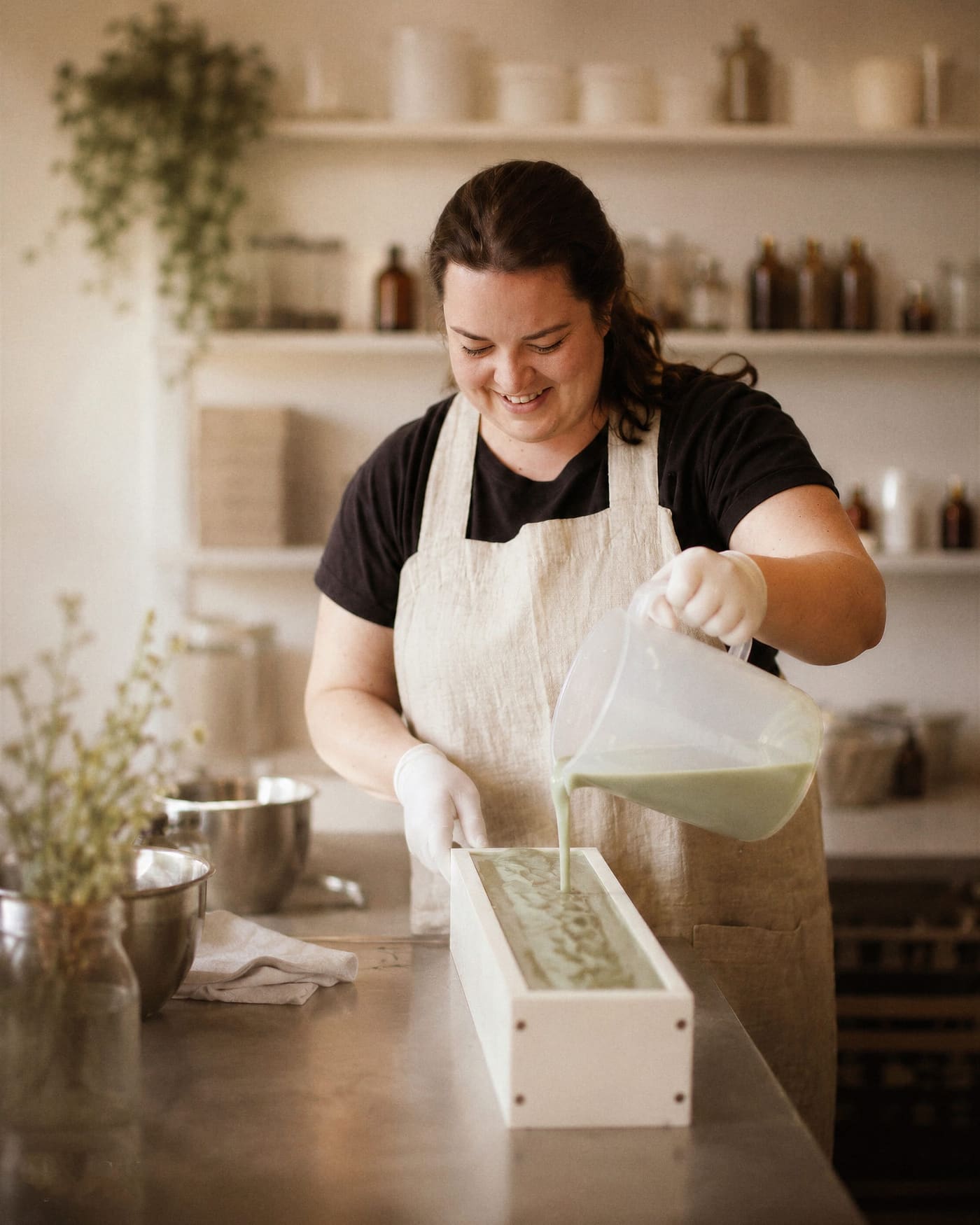
What soap actually is
Soap is one of the oldest cleansing products we still use today. Classic bar soap is made from fats or oils, which can be of plant or animal origin, and an alkali. It comes about through a process called saponification, in which the fats react with the alkali and turn into soap and glycerine.
Oils and fats are made up mostly of triglycerides — compounds of glycerine and fatty acids. When we mix them with a sodium hydroxide solution to make bar soap, a chemical reaction starts that produces the sodium salts of fatty acids — our soap — and glycerine.
Sound complicated? Unless you happen to be a chemist, you may have got lost somewhere in the second sentence — and honestly, we're not surprised. All you really need to know is that at the start we have oils, butters and sodium hydroxide, at the end soap with naturally formed glycerine, and in between a bit of chemistry and several weeks of patience.
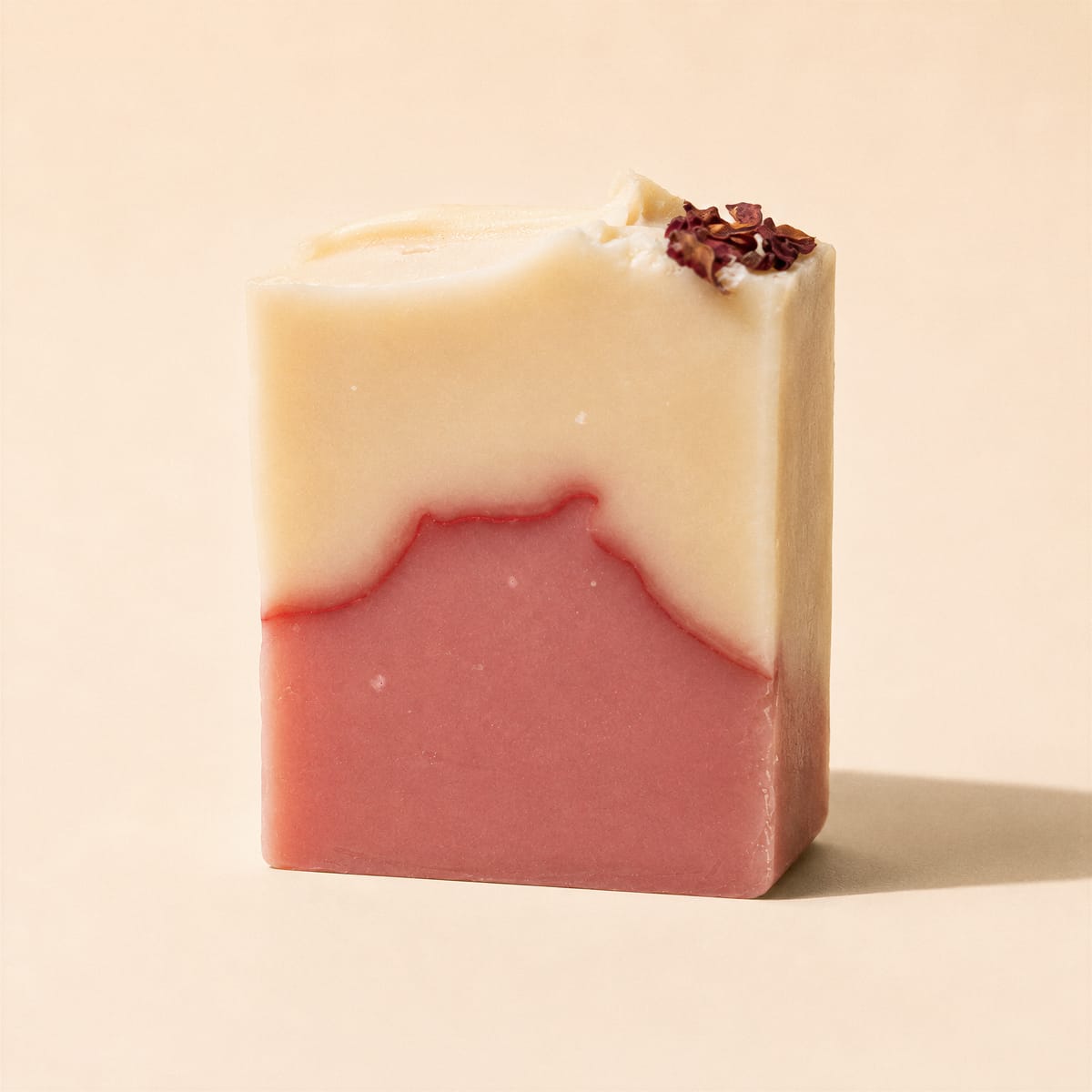
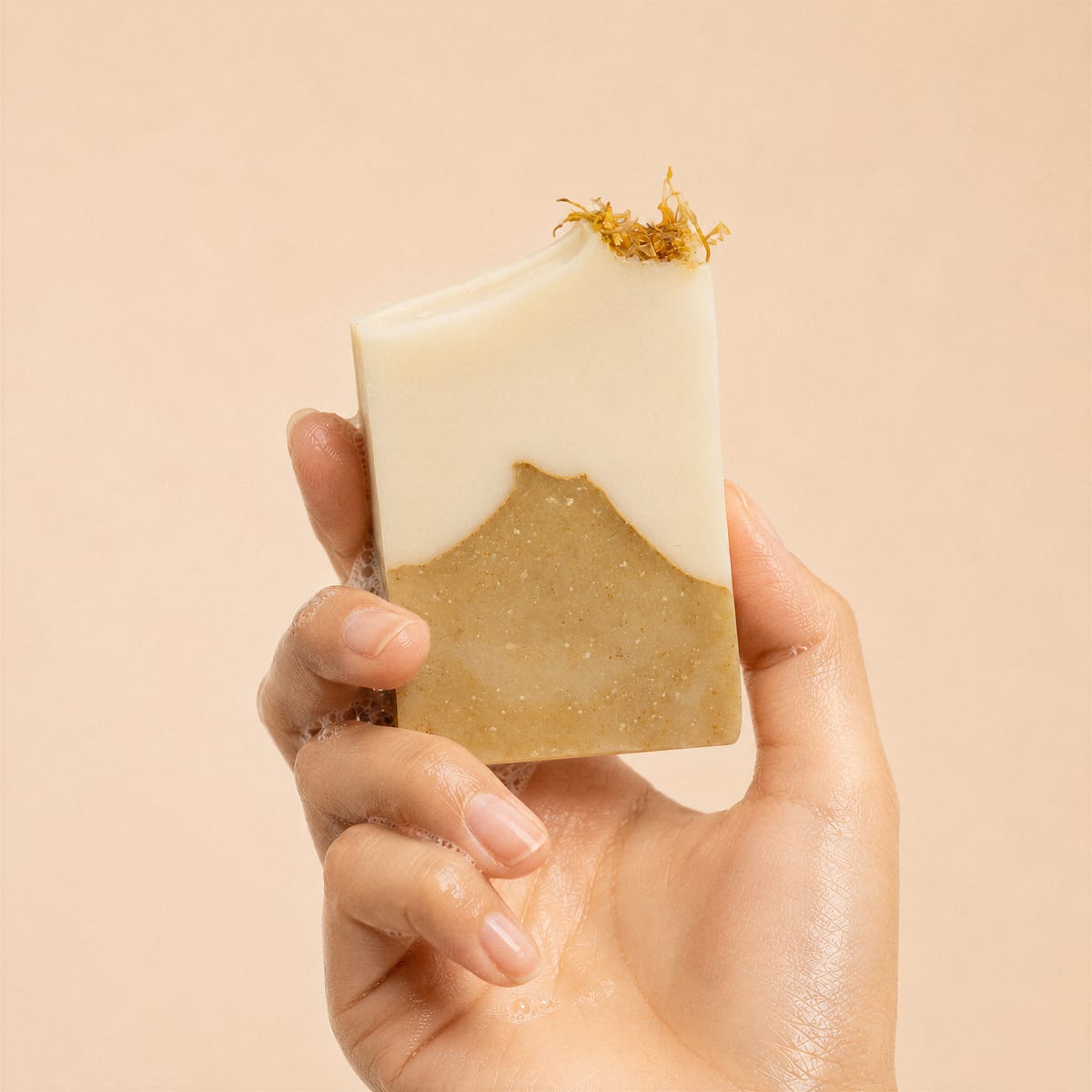
Oils and butters are the basis of every one of our soaps. When they react with an alkali, soap is formed — and glycerine along with it.
Where soap comes from
Soap has thousands of years of history behind it, although we don't know the exact moment it was discovered. Mixtures of fats and alkaline substances were already known to ancient civilisations, and evidence of soap-like materials comes, for example, from ancient Mesopotamia.
The history of soap is often linked to the legend of Mount Sapo in Rome. According to the legend, women washed clothes in the River Tiber at a spot where animal fat from sacrificed animals, mixed with ash, was said to run down from the mountain. They supposedly noticed that the laundry washed more easily there, and that is how soap is said to have been discovered. It's a nice story, but we have no historical evidence that soap came about in exactly this way or that its name comes from Mount Sapo, so today we regard it more as a soap makers' legend.
What we know with far more certainty is that people gradually refined the making of soap from fats and alkaline substances obtained, for example, from ash. Later, the Arab world earned an important place in the history of soap making, developing the production of quality bar soaps from plant oils, above all olive oil. Methods were refined over the centuries, but the basic chemical principle stayed the same — and it's the very principle our soaps are based on too.
Millennia in a single bar
| Antiquity | The first known mixtures of fats and alkaline substances that can be considered the forerunners of today's soap. |
|---|---|
| Mount Sapo | The legend of the women washing clothes by the River Tiber is one of the best-known stories about the origin of soap, but it isn't historically confirmed. |
| The Arab world | The development of quality soaps made from plant oils, especially olive oil, and an important step in the evolution of the soap-making craft. |
| Today | The same principle of saponification, our own recipes, production by hand and several weeks of curing. Here in Prievidza. |
The main ingredients of our soaps
What you won't find in our soaps
Palm oil. We've never used it, right from the start, and we replace it with olive, coconut and other plant oils. The same lather, the same cleansing ability, no pressure on tropical rainforests.
Animal fats. Plant oils and butters are the basis of every one of our recipes. The only raw material of animal origin is beeswax, and you'll only find it in selected types.
Synthetic surfactants. The cleansing is done by the soap itself — the sodium salts of fatty acids formed by saponifying the oils. No foaming agents added afterwards to make the lather look richer.
Preservatives. Bar soap doesn't need them. After curing, very little water is left in it and its environment is alkaline, so bacteria and moulds have nowhere to grow. It's cosmetics that contain water that need preserving — creams, body lotions and liquid soaps.
So how does soap actually work?
Water on its own doesn't get on very well with grease and greasy dirt, because water and oil don't naturally mix. This is where soap comes in: it's a surface-active substance, or surfactant. A soap molecule has one part that bonds well with water and another that has an affinity for grease.
When you wash, soap molecules arrange themselves around greasy dirt and form structures called micelles. The grease stays trapped inside, while the outer part of the micelle interacts with the water. The dirt can then disperse in the water and leave with it when you rinse. So what we take completely for granted when we wash is actually chemistry that works very well.
The traditional cold process
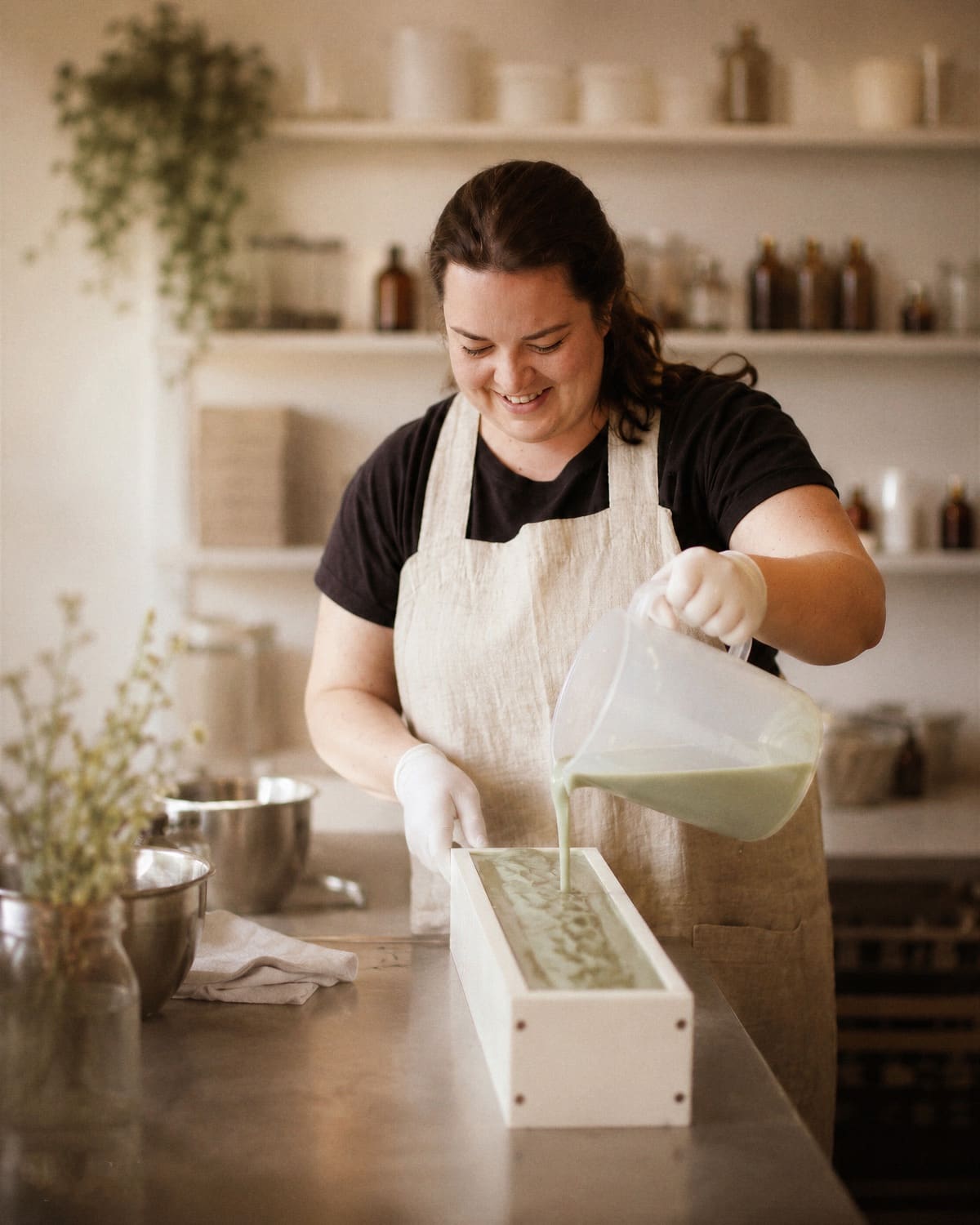
We make all our soaps by the traditional cold method, also known as the cold process. We mix melted oils and butters with a precisely calculated amount of sodium hydroxide solution, and a chemical reaction called saponification begins. The reaction is exothermic, so the mixture naturally warms up during it, gradually thickens, and soap forms along with glycerine.
Once it has set, we take the soap out of the mould, cut it by hand and lay the individual bars on shelves, where they stay for several weeks. During curing, some of the water gradually leaves the soap, and the bar hardens and takes on the properties of finished soap. The naturally formed glycerine stays part of it; glycerine is a hygroscopic substance capable of binding water and is commonly used in cosmetics as a humectant.
Our soaps cure for at least 30 days, longer for some types, and only then do we pack them. This process can't really be skipped or persuaded to hurry — soap simply needs its time. We've written about curing in detail in a separate article: Why does soap cure?.
Production in a nutshell
| Mixing | We combine melted oils and butters with a precisely calculated amount of sodium hydroxide solution. |
|---|---|
| Saponification | A chemical reaction takes place in which the fats and the alkali turn into soap and glycerine, and the mixture naturally warms up. |
| Glycerine | It forms naturally during saponification and, with our production method, stays part of the finished soap. |
| Curing | At least 30 days, longer for some types. During this time the soap loses some of its water and gradually hardens. |
We don't rush our soaps — we cut them by hand, set them aside to cure and pack them only when they're ready.
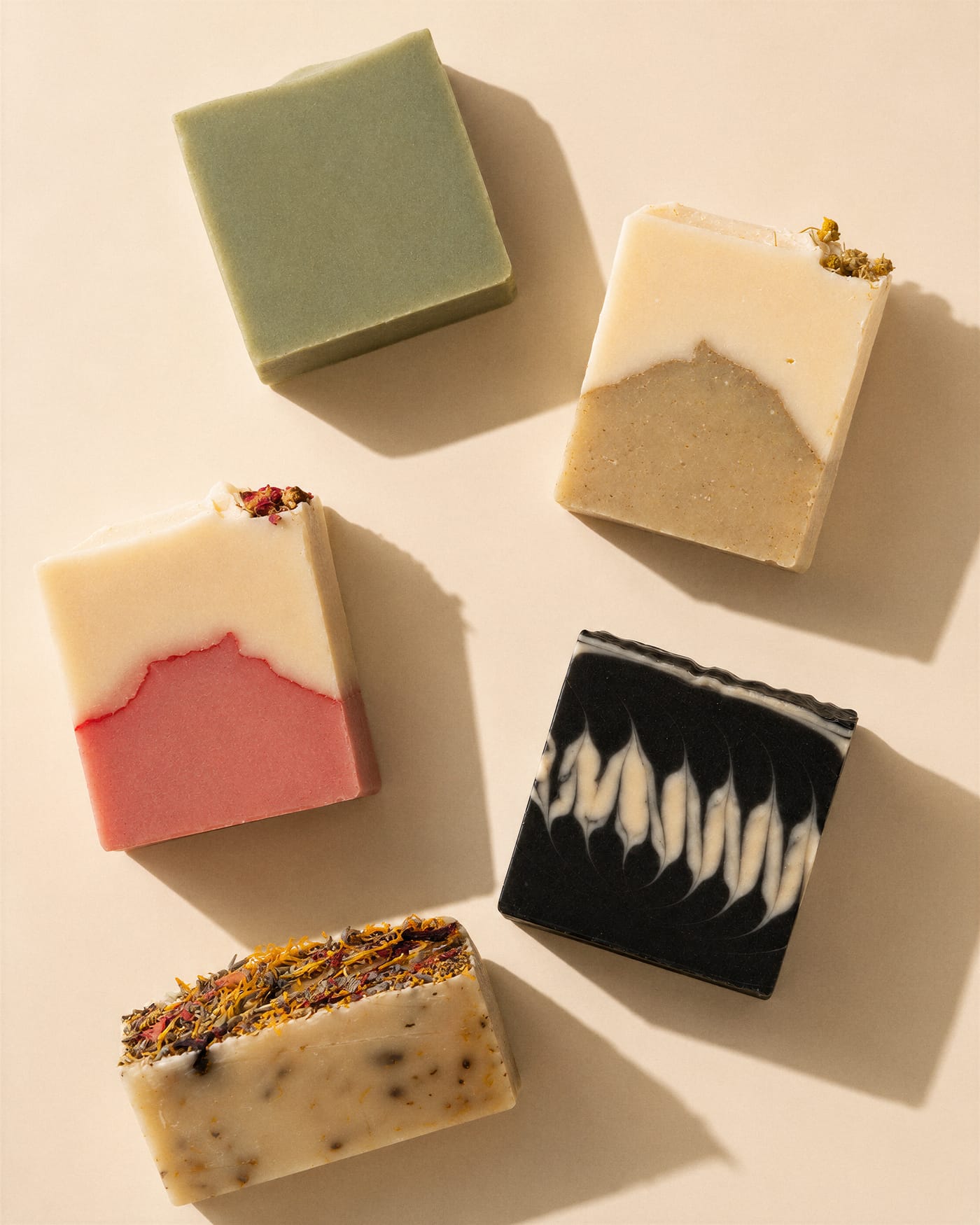
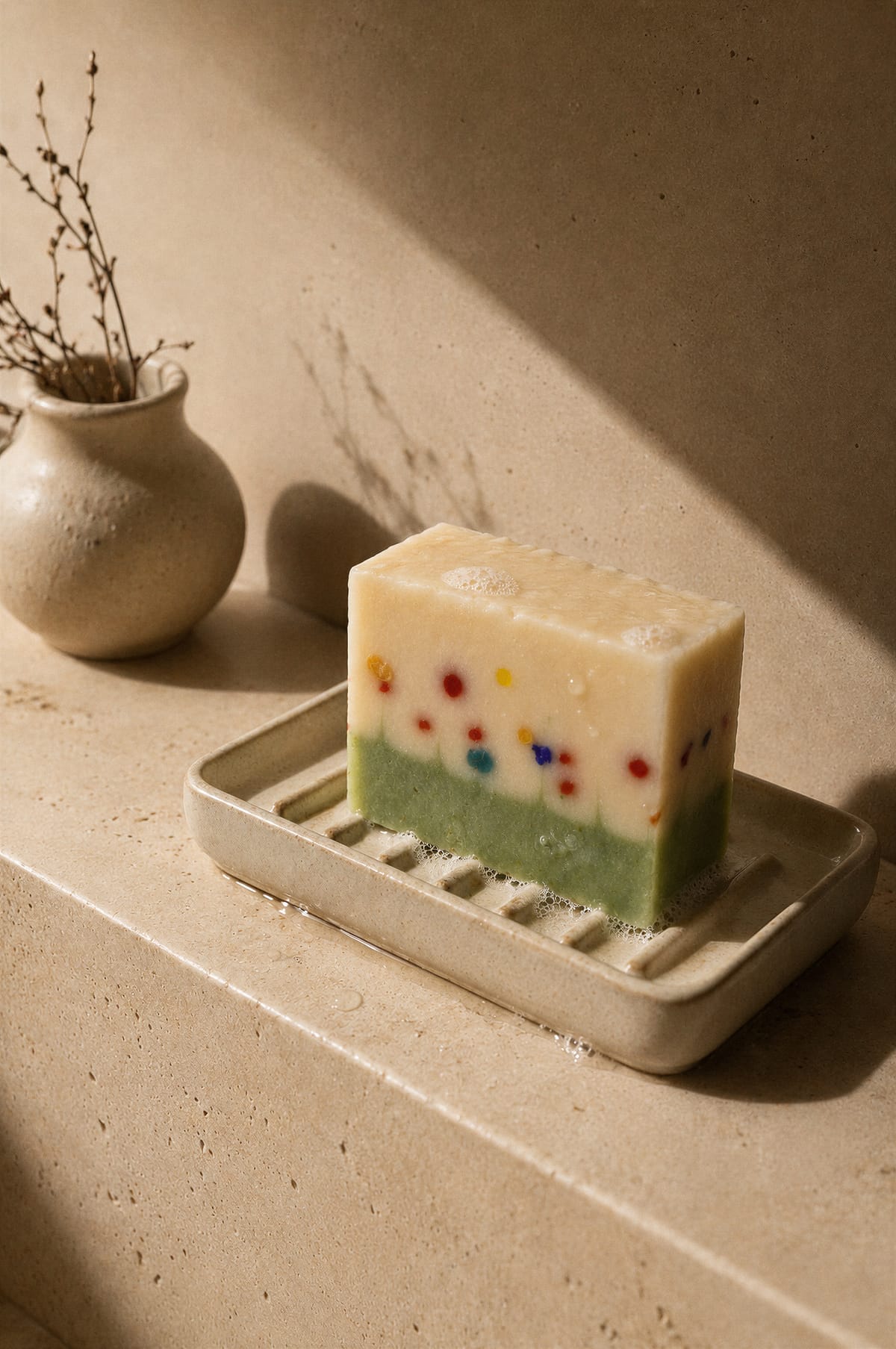
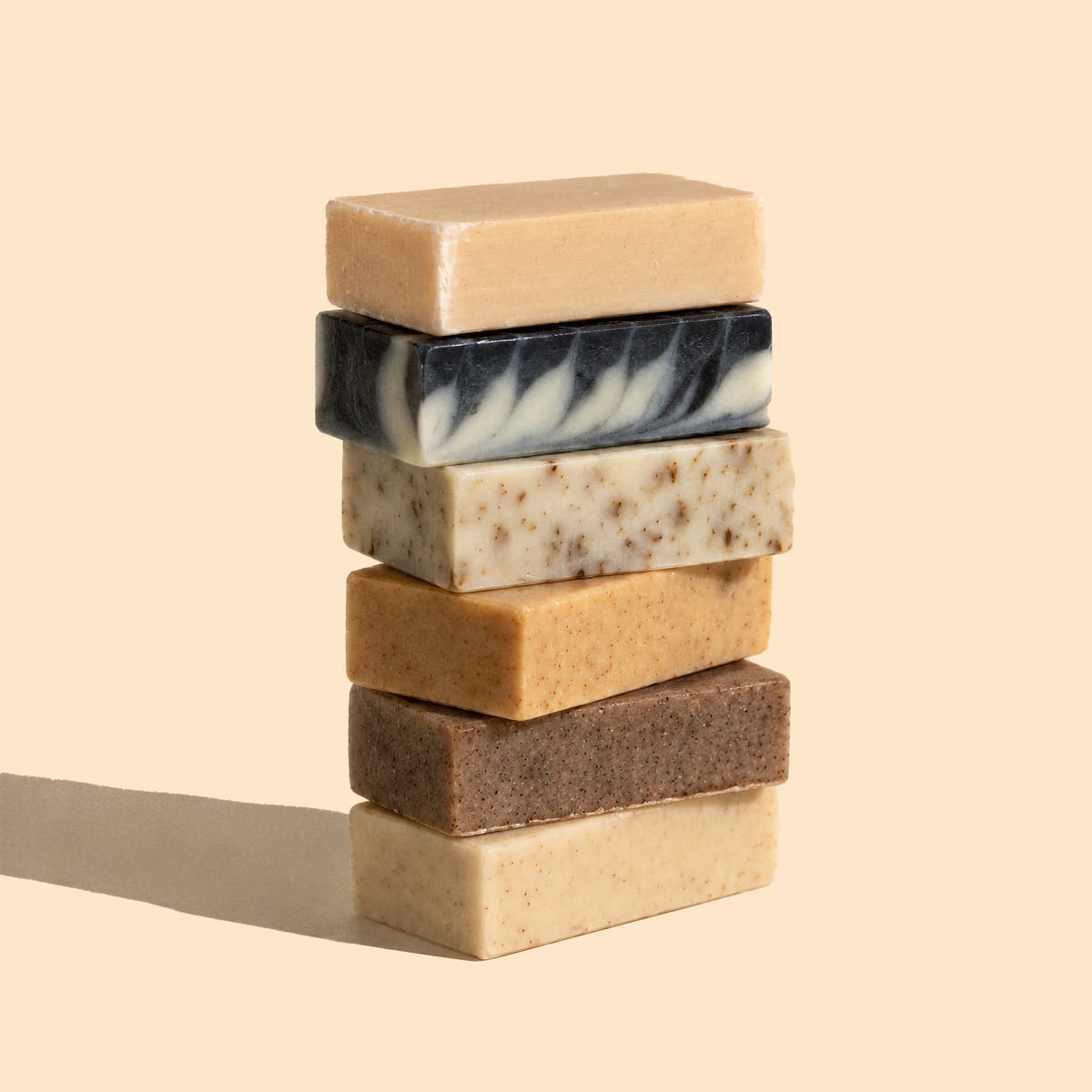
Every soap in our range is one of a kind
Frequently asked questions about soap
What is saponification?
Saponification is the chemical reaction of fats with an alkali. To make bar soap we use sodium hydroxide, and the reaction produces the sodium salts of fatty acids — that is, soap — and glycerine.
What is soap made from?
Classic bar soap is based on fats or oils and an alkali, which for bar soaps is most often sodium hydroxide. A specific recipe may combine various plant oils and butters and contain other ingredients, such as herbs, clays, pigments, activated charcoal or essential oils.
Why is there glycerine in soap?
Glycerine forms naturally during saponification along with the soap itself. With our production method, it stays part of the finished soap mass.
How long does soap take to cure?
We leave our soaps to cure for at least 30 days, longer for some recipes. During this time they gradually lose some of their water and harden, so we only pack them once curing is complete.
Are the soaps suitable for vegans?
Plant oils and butters are the basis of our recipes, but some types contain beeswax. If you're looking for a vegan soap, it's the ingredients of the specific product that count.
Use with love! ♥
Soap you understand.
We hope you'll find the right little soap in our wide range — one that brightens your day and takes care of your skin.
Browse our soaps