
In Plain English: What is saponification and what role does it play in making soap?
Saponification sounds like the kind of word you'd send the children out of the room for. In reality, it simply means turning into soap – the chemical reaction in which oils and lye become soap. It takes place whenever true soap is made, and without it soap simply wouldn't exist.
What's more, here at MuSK we talk about it openly. Lucka is a trained chemist, so while elsewhere chemistry sometimes hides behind the flowers on the label, for us it's a natural part of the story. There's no reason to pretend that no chemistry happens when soap is made.
It does. And it's quite fascinating.
How oil becomes soap
At the start there are oils and butters and a solution of sodium hydroxide, commonly known as lye. The oils on their own aren't soap yet, and mixing them thoroughly with water won't do it either. The important part only begins the moment they meet sodium hydroxide.
Most plant oils and fats are made up mainly of triglycerides – molecules consisting of glycerol with fatty acids attached to it. When triglycerides react with sodium hydroxide, their original structure changes and new substances are formed: sodium salts of fatty acids, in other words soap, and glycerine.
Put simply:
oils and fats + sodium hydroxide → soap + glycerine
And the word formed is the important one. The oil and the hydroxide don't simply sit side by side in the soap as two original ingredients. They enter into a chemical reaction and turn into new substances.
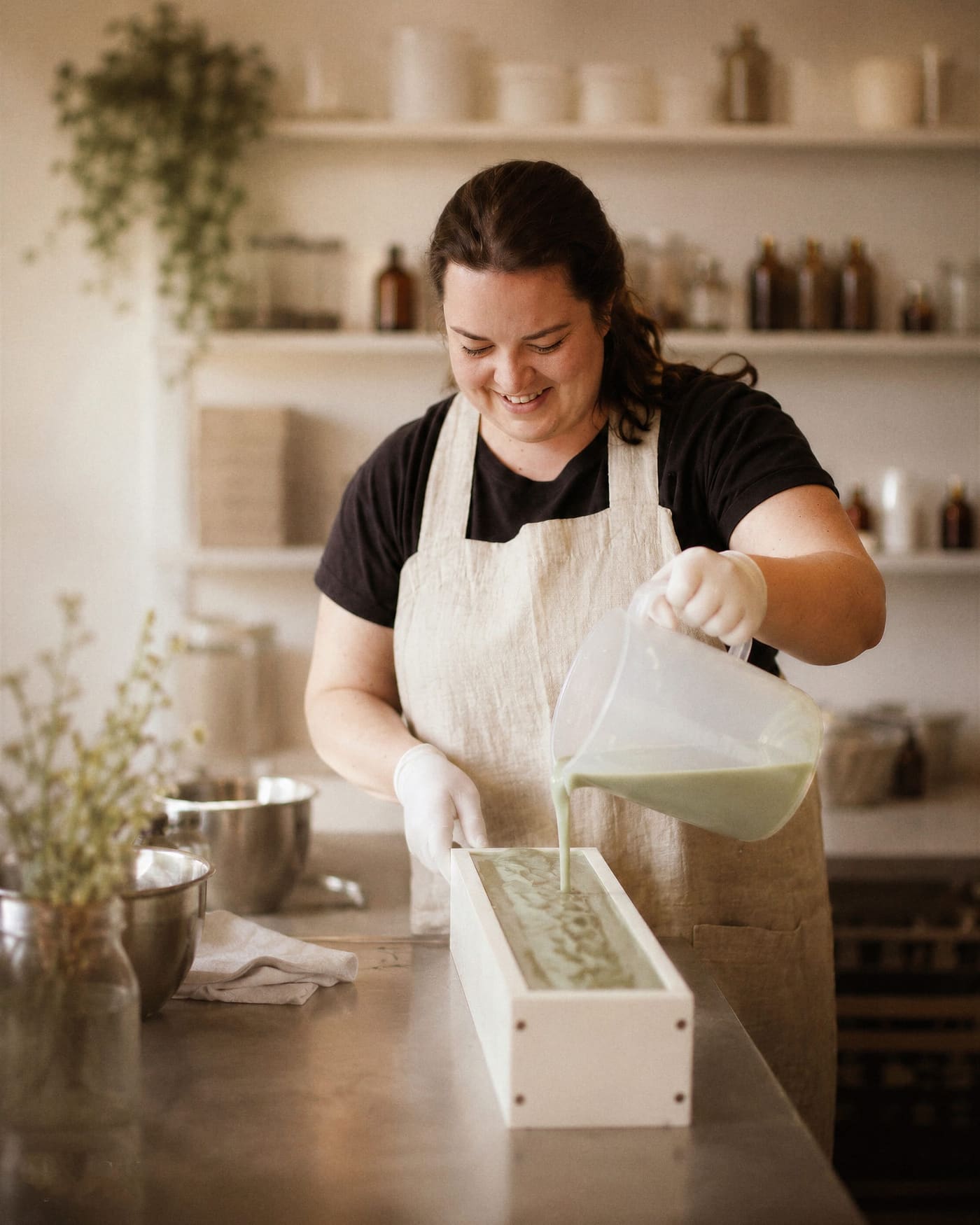
Soap isn't oil mixed with lye. Soap is the result of their chemical reaction.
Sodium hydroxide doesn't exactly have the best PR
On a label it doesn't sound as romantic as olive oil, shea butter or lavender, and in a product photo next to dried flowers it probably wouldn't collect many likes either.
But without an alkali, you can't make classic soap from fats and oils.
We can keep it out of shot. We can't erase it from the chemistry.
Sodium hydroxide is a strong alkali and, in concentrated form, a corrosive substance, so it requires precise and safe handling during production. In a soap recipe, though, it isn't there to stay. It's a reactant needed for saponification.
Which brings us to a question we're asked often, and quite rightly.
Where does the lye go?
If soap is made using lye, doesn't the lye stay in the soap too?
In a correctly formulated and properly handled recipe, the hydroxide reacts with the fats during saponification. That's exactly why we do so much calculating, weighing and checking in production.
Individual oils and butters don't have the same composition, and saponifying them doesn't take the same amount of hydroxide. That's why formulation works with saponification values, which are used to calculate the amount of alkali needed for a particular combination of fats.
That's also why you can't simply swap one oil for another in a finished recipe and leave everything else unchanged.
A soap recipe isn't a guess, it's a calculation.
Precision here isn't pedantry. It's the foundation of properly managed production.
Not every oil makes the same soap
This is where saponification gets even more interesting.
Olive, coconut or any other plant oil doesn't just sound different on the label. Each has its own fatty acid profile and so, once saponified, contributes to the properties of the finished soap in a different way.
The proportions of the individual fatty acids affect, for example, the soap's hardness, its solubility and the character of its lather. So creating a recipe isn't about collecting as many nice-sounding oils as possible. What matters is what a particular raw material does in the recipe and how it works together with the others.
That's why a soap with a high proportion of one oil can have completely different properties from a soap built on a different combination of fats.
And one more thing that's easy to forget: the oil we put into the recipe at the start is no longer simply the same oil after saponification.
It has gone through a chemical reaction. And that transformation is the essence of soap making.
And where did the glycerine come from?
We didn't have to sneak it in.
Glycerine forms naturally during saponification itself. Triglycerides have a glycerol backbone, and when they react with hydroxide, glycerine is one of the products of the chemical reaction.
It's hygroscopic, meaning it can bind water, and that's exactly why you know it from serums, creams, shower products and plenty of other cosmetics, where it's used as a humectant.
And now a bit of soap trivia.
In some traditional industrial production methods, glycerine is separated from the soap mass. The soap phase can be separated from the water phase, which contains glycerol among other things; the glycerol is then recovered and processed further as a valuable raw material in its own right. Glycerine is used not only in cosmetics but also in the pharmaceutical, food and other industries.
We don't do this step with our cold-process soap. The glycerine that forms naturally during saponification stays part of the soap.
So while elsewhere glycerine gets added to cosmetics, when we make soap, chemistry produces it for us right on the spot.
A rather handy reaction.
Why does soap wash at all?
Saponification doesn't just produce a solid bar. It produces soap molecules that have one very useful property.
They have a part with an affinity for water and a part with an affinity for fats and greasy dirt. In water they can arrange themselves into structures that help trap greasy dirt, disperse it in the water and then remove it from the surface when rinsing.
This is where chemistry becomes something very practical.
Saponification doesn't just create something that looks like soap. It produces the very substances that allow soap to do its job.
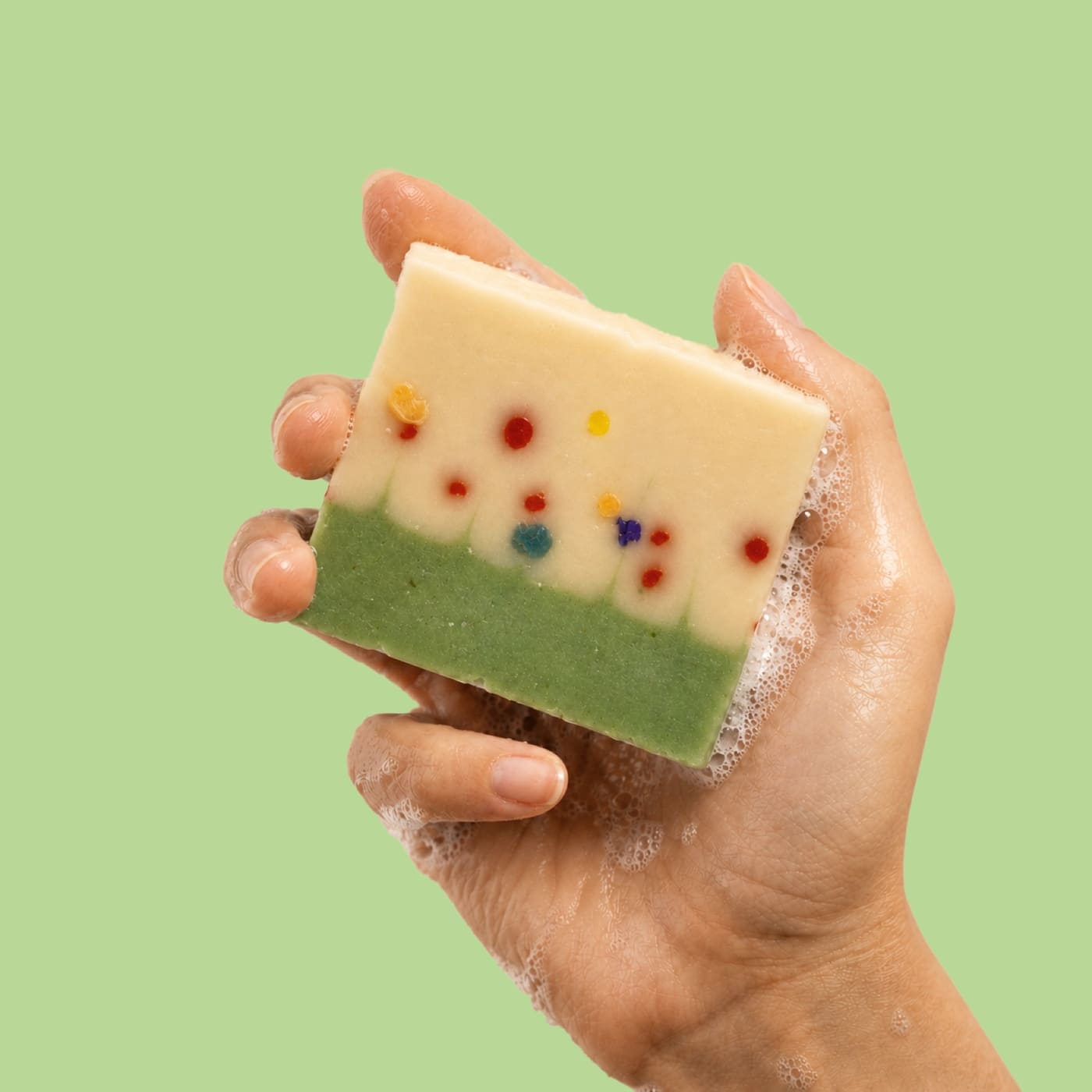
Hot or cold?
Saponification takes place in various soap-making methods. Two well-known craft methods are the hot process, where soap is made with heat, and the cold process, where it is made cold.
And here at MuSK we have a small historical paradox.
Our very first soaps from 2015 – the wedding soaps that started the whole MuSK story – were made using the hot process. In this method the process is helped along by added heat, and a significant part of saponification takes place during production itself.
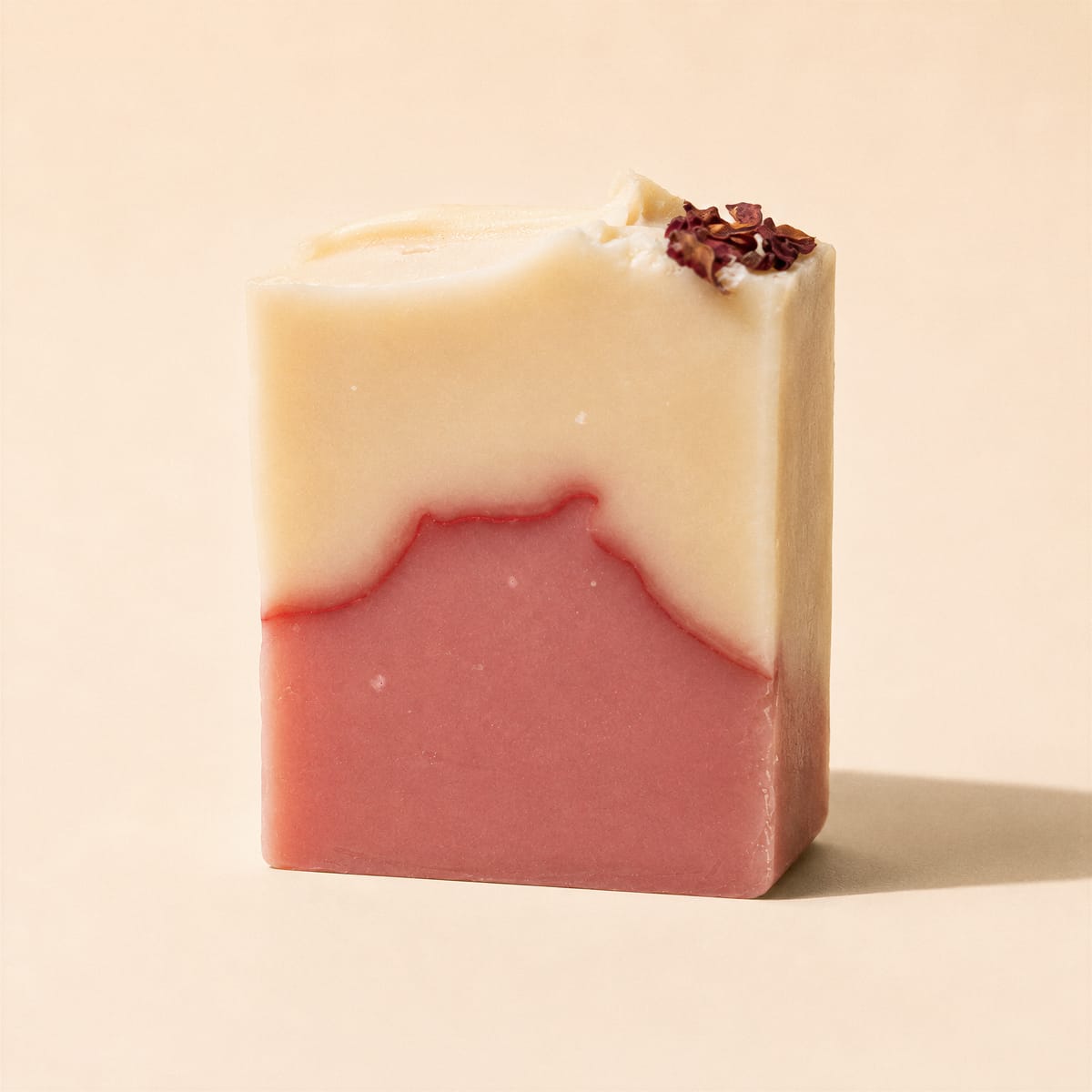
Over time we switched to the cold process, and we've stuck with it to this day. In this method the soap mass is poured into a mould after mixing, left to set and then cut by hand. But that's not the end of the soap's journey.
Next comes curing.
And that can't be sorted out with an express surcharge.
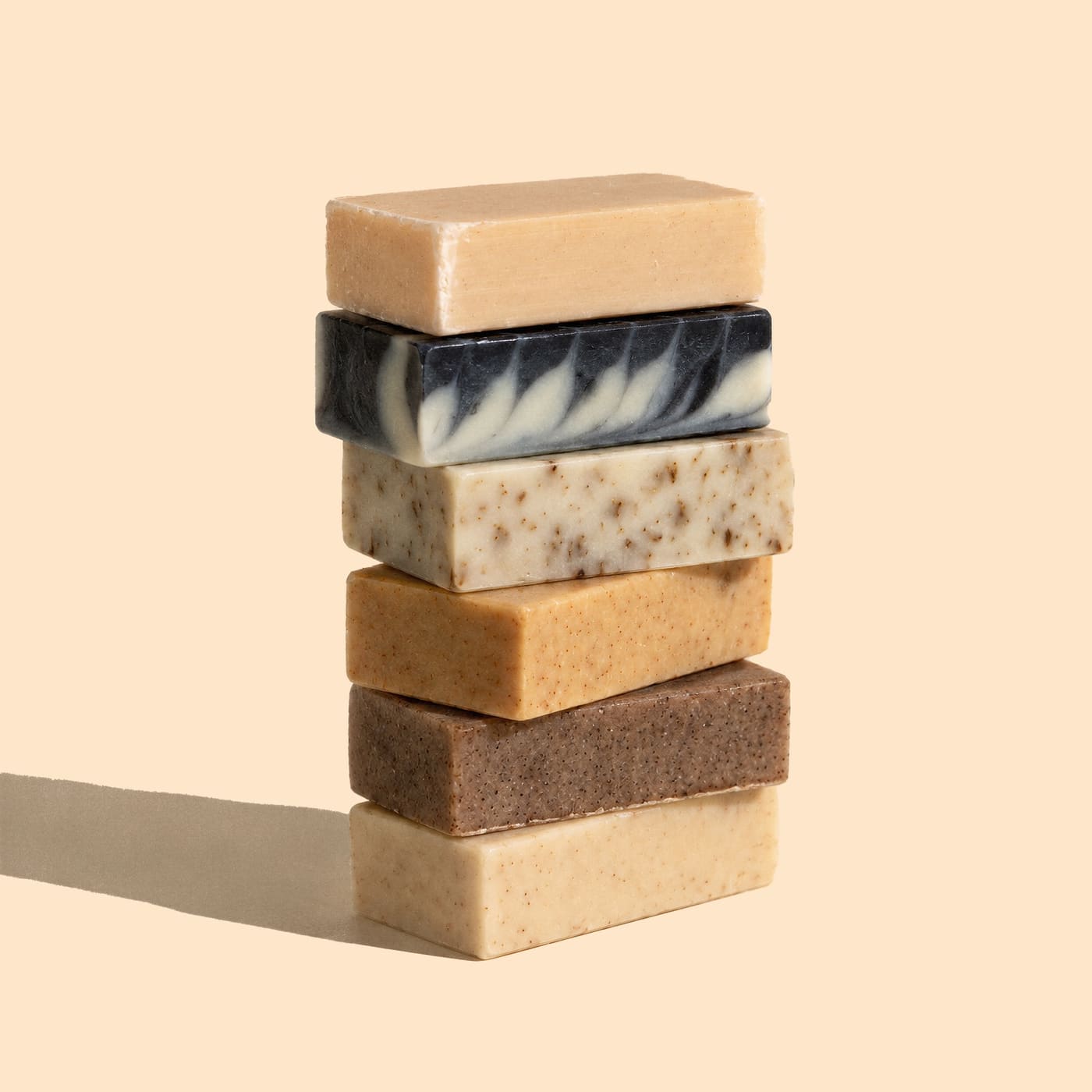
Saponification isn't curing
These two terms often come up together when talking about handmade soap, but they aren't synonyms.
Saponification is a chemical reaction in which fats or oils and hydroxide produce soap salts and glycerine.
Curing is the phase that follows, during which the soap, among other things, gradually loses some of its water and hardens, and its physical and in-use properties change.
So it isn't accurate to imagine that soap has to sit for several weeks just so that “the lye disappears”. Saponification and curing are two different, though related, processes.
That's why our freshly cut soap doesn't go straight into a box. It goes onto a shelf, where it gets exactly as much time as it needs. Only then is it packed and sent on its way.
You can read about what exactly happens to soap during those weeks and why curing isn't worth skipping in a separate article, In Plain English: Why does soap cure?
So what actually is saponification?
If you want to take away just one sentence from this whole article, let it be this one:
Saponification is a chemical reaction in which fats and oils, through the action of an alkali, are transformed into fatty acid salts – that is, soap – and glycerine.
Without it we could have quality oils, precise scales, a beautiful mould, a scent and even the best name on the label.
We'd just somehow be missing the soap.
And next time you hear the word saponification, there's no need to send the children out of the room.
Although while the soap is actually being made, you'd better.
And one last question
Now that we know one bar involves a choice of oils, a precise calculation of hydroxide, a chemical reaction, handwork and, with the cold process, several weeks of curing as well, a fairly logical question comes to mind:
So how can soap on the shop shelf cost just a few coins?
The answer isn't just “because they make a lot of it”. Industrial soap may have taken a completely different technological route – from making the soap base and possibly separating out the glycerine, through drying and further processing, to adding the ingredients needed to achieve the desired properties of the final bar.
So what are you actually buying with the cheapest soap on the shelf, and what are you paying for with a handmade one?
That's a topic for an article of its own.
Straight Talk: Why does handmade soap cost more?
To lather is human. Knowing how soap is made is human too.


To lather is human. So is subscribing.
New recipes, myths from the soapery and market dates. We only write when we have something to say.