
Straight Talk: Why do we make salt soaps?
Straight Talk · 6 min · 14 August 2026 · MuSK
Salt is one of those raw materials we feel we know inside out. We have it in the kitchen, in the sea and in bath salts, but when we add it to soap, it starts doing a lot more than just justifying the name.
It changes the soap's hardness, texture, solubility and the way it behaves in contact with water. The result is a very firm, compact bar that glides smoothly over wet skin and has a slightly different character in use from our classic soap. And because salt affects almost everything, you can't simply tip it into a favourite recipe and hope for the best.
Salt soap needs a recipe of its own.
So what exactly is salt soap?
The base is made the same way as for our other bar soaps. Plant oils and fats react with sodium hydroxide and, through saponification, turn into soap. The difference comes at the moment we add a larger amount of fine salt to the soap mass.
And we don't mean a token pinch for a nice name on the label. In a true salt soap, salt makes up a significant part of the recipe and fundamentally affects the finished bar.
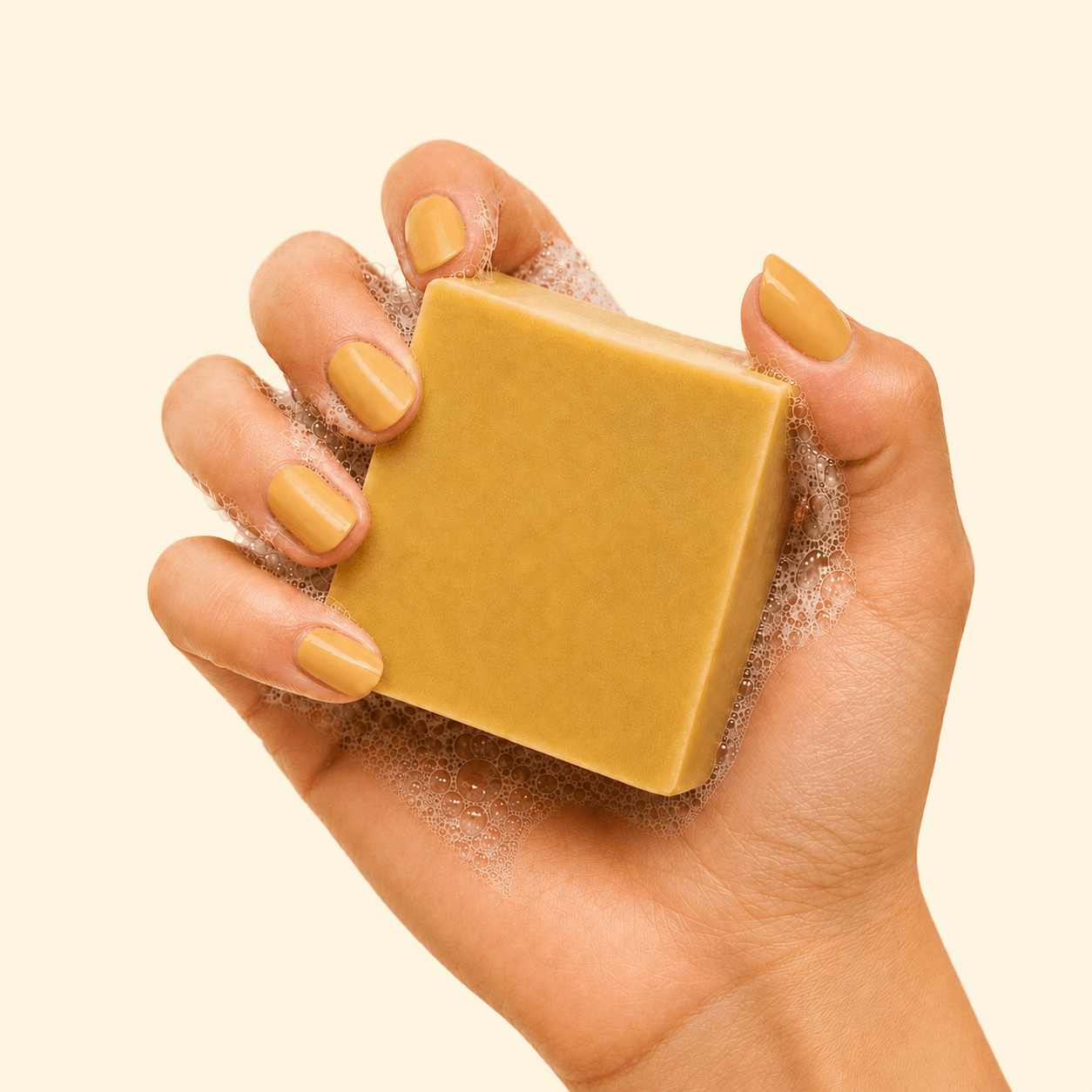
Sodium chloride reduces the soap's solubility in water, which is why salt soap is characteristically hard and compact. You'll notice this when you use it, too – the bar has a firm, smooth surface and, if it dries out properly, holds its shape very well.
Salt also changes the making process itself. Once it's added, the soap mass thickens quickly, so there isn't much time to think while working with it. By that point we need to have everything ready.
Salt soap or brine soap? They're not the same thing
Although the two names are sometimes used interchangeably, they are two different ways of making soap.
With salt soap we add fine salt directly to the soap mass. The finished bar can therefore contain considerably more of it, and it becomes part of the bar's characteristic texture.
With brine soap, also known as Soleseife, the salt is first dissolved in water and the soap is then made from the resulting salt solution. The amount of salt is therefore naturally limited by how much of it will dissolve in water, and the finished bar has a slightly different character.
In both cases we're working with sodium chloride, but the way it gets into the recipe affects both the amount of salt and the properties of the finished soap. So when we talk about our salt soap, we don't just mean a classic soap made with salty water.
Not all salt is the same
Sea, rock, Himalayan, table. At first glance it might seem that, to make salt soap, you just need to pick whichever sounds best on the label. But we don't choose by how photogenic it is here either.
What matters most for soap making is the composition and purity of the salt. The basis should be sodium chloride without unnecessary additives, because other minerals and impurities can affect the making process, the appearance and the final properties of the soap. Salts with a higher content of other minerals, for example, can be problematic, and with ordinary table salt you also need to watch out for added anti-caking agents and other additives.
So even the label “sea” doesn't automatically mean more suitable, and pink Himalayan salt won't turn soap into better soap just because it has a more interesting origin and a prettier colour. When making soap, we're far more interested in what is actually in the salt and how it will behave in the recipe.
And then there's one more salt we definitely wouldn't put into soap: Epsom salt isn't sodium chloride but magnesium sulphate. Chemically and technologically it's a completely different raw material, and it doesn't behave the same way in a classic salt soap.
So yes, even with an ingredient as ordinary as salt, you can choose badly. With soup you can experiment a little more freely.
Why do we make salt soap?
Because it's different. Not better than all other soaps and certainly not miraculous, but it has properties we can't get in a classic bar of soap.
Salt gives it exceptional hardness and compactness and changes how washing feels. A wet bar has a characteristically smooth surface and glides very pleasantly over the skin. This difference is one of the reasons salt soaps have their loyal fans.
Over the years, a lot of claims have also built up around salt about detoxing, “drawing out toxins” or treating problem skin. Best not to expect any of that from our soap. Soap stays on the skin only briefly and its basic job is to wash the skin well. It doesn't need the CV of a spa treatment to do that.
For us it's interesting precisely because of what we can genuinely influence through the recipe: its texture, its hardness, the way it's used and the feeling it leaves when you wash.
And your classic question is: doesn't salt soap dry out the skin on your hands?
The presence of salt alone doesn't mean a soap has to dry out the skin. How it behaves when you wash with it is decided by the whole recipe – the oils used, their ratio to one another, the amount of salt and above all correctly set superfatting.
With salt soap, this balance is especially important. The recipe has to take into account the properties of the salt as well as of the individual oils, so it can't be judged by one ingredient pulled out of the list.
Superfatting, meaning a deliberately set excess of oils over the amount of hydroxide needed to saponify them, also plays an important role for us. If you've read our article on superfatting, this is exactly where you can see why we calculate every soap recipe as a whole.
So no, salt in soap doesn't automatically mean dry hands. What matters far more is how the whole recipe is built. And we didn't salt ours by eye.
So why does it lather less?
Here we finally get to the property you'll probably notice the first time you use it.
Salt reduces the soap's solubility in water and also affects the conditions under which bubbles form and stabilise. That's why salt soap doesn't produce the same big, airy lather as some classic recipes. A finer, creamier lather is more typical of it.
It's not a fault in the recipe or a sign that the soap washes less well. After all, the amount of lather isn't a direct measure of cleansing ability. Lather is very pleasant feedback for us humans, but soap does its job through surfactants, meaning fatty acid salts, not through the number of bubbles we see in the palm of our hand.
And with that we can safely close the subject of lather.
How do you use salt soap?
Perfectly normally. It doesn't need a spa ritual, three pages of instructions or a full moon.
Wet the bar and work up a lather between wet palms, or use it with a soap bag or a sponge. Then wash your skin and rinse with water.
There's no need to use salt soap as a mechanical exfoliant or to scrub your skin hard with it. Its job is to wash, and the properties of the salt are already part of the recipe itself.
After use, give it what you'd give every good bar of soap: a chance to dry out. A soap dish that lets water drain away and air circulate around the bar is ideal. Even though salt soap is very hard, a permanent stay in a puddle still isn't one of its hobbies.
When to reach for salt soap and when for a classic bar
Neither is better. They're two different bars for two different moments, and the difference is marked enough that it's worth knowing in advance what to expect from each.
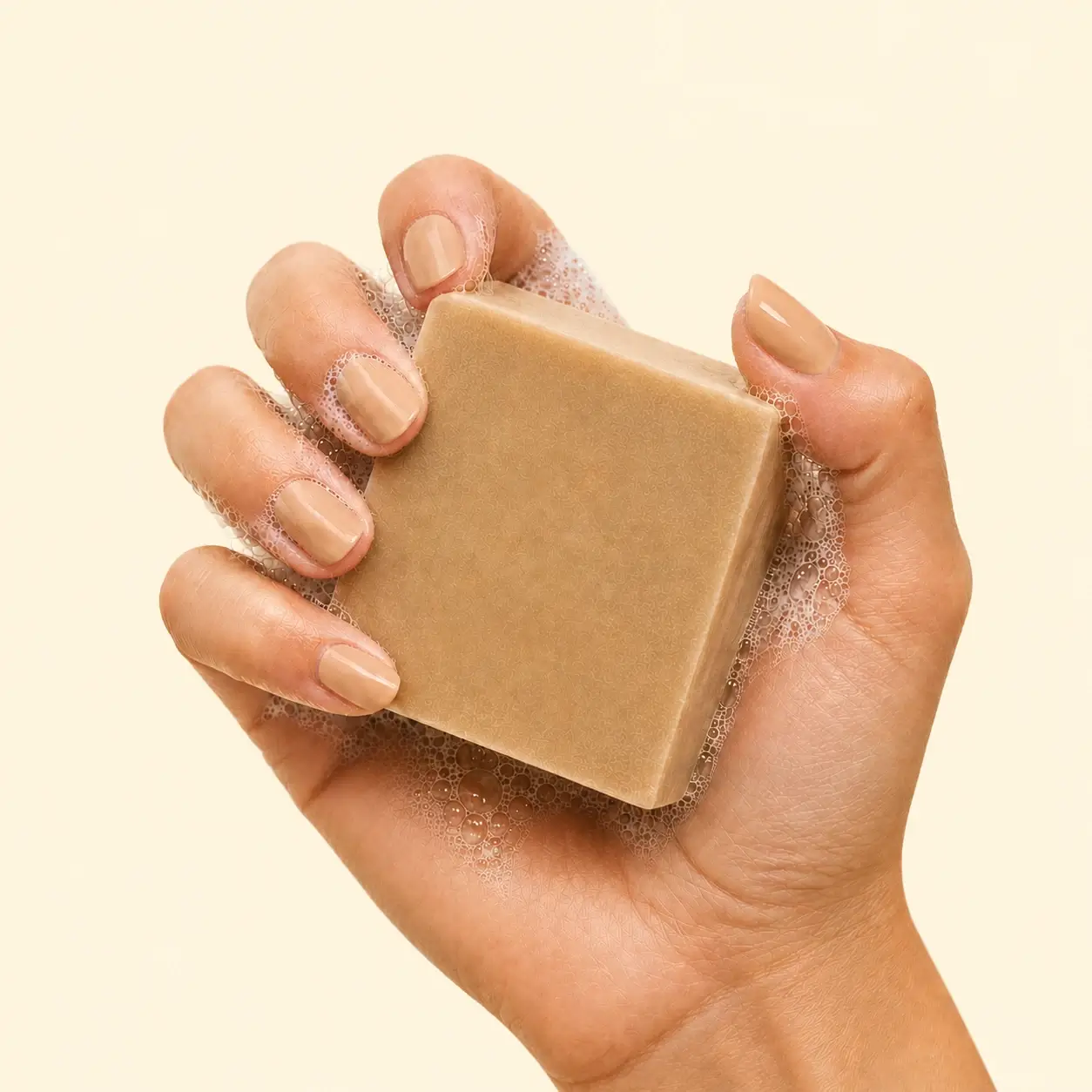
Choose salt soap when you like the feel of a smooth bar that glides over your skin once wet, and when you don't mind a fine, creamy lather instead of a rich, airy one. Thanks to its hardness it wears down slowly and copes with bathroom conditions that don't suit softer soap. It's the ideal choice for anyone who can't stand soggy soap on the soap dish.
Classic soap, on the other hand, comes into its own when you want a generous lather that spreads easily over a larger area, and when you choose by scent or looks. The range of recipes is simply wider with classic soaps, and there are more ways to find exactly the one that suits you.
And then there's a third option, which most of our customers go for: keep both at home and reach for whichever you feel like at the time. Soap isn't a lifelong commitment.
A simple raw material, a slightly less simple soap
The nice thing about salt is precisely that at first glance it seems completely ordinary. Sodium chloride, which we all have at home. In a soap recipe, though, it can change the way the soap is made and the properties of the finished bar so much that it calls for a completely different approach — and that's before the bar even goes onto the shelf to cure.
And that's actually one of the reasons we still enjoy making soap. Sometimes all it takes is changing one seemingly ordinary raw material and suddenly you have to rethink the whole recipe.
To lather is human. Adding a little salt is human too.
Browse salt soaps.


To lather is human. So is subscribing.
New recipes, myths from the soapery and market dates. We only write when we have something to say.