Straight Talk: Why does handmade soap cost more?
To lather is human. Knowing what you're paying for is human too.At first glance, it's still just a bar of soap. One costs a euro or two, another several times as much. Both lather, both wash and both eventually disappear down the drain. But the difference in price doesn't start at the price tag. It starts much earlier — with what the soap was made from, how it was made and how much work and time went into one finished bar.
Industrial and handmade soap can look similar, but the road to each is often completely different. Let's break it down without romanticising the craft or scaremongering about industry.
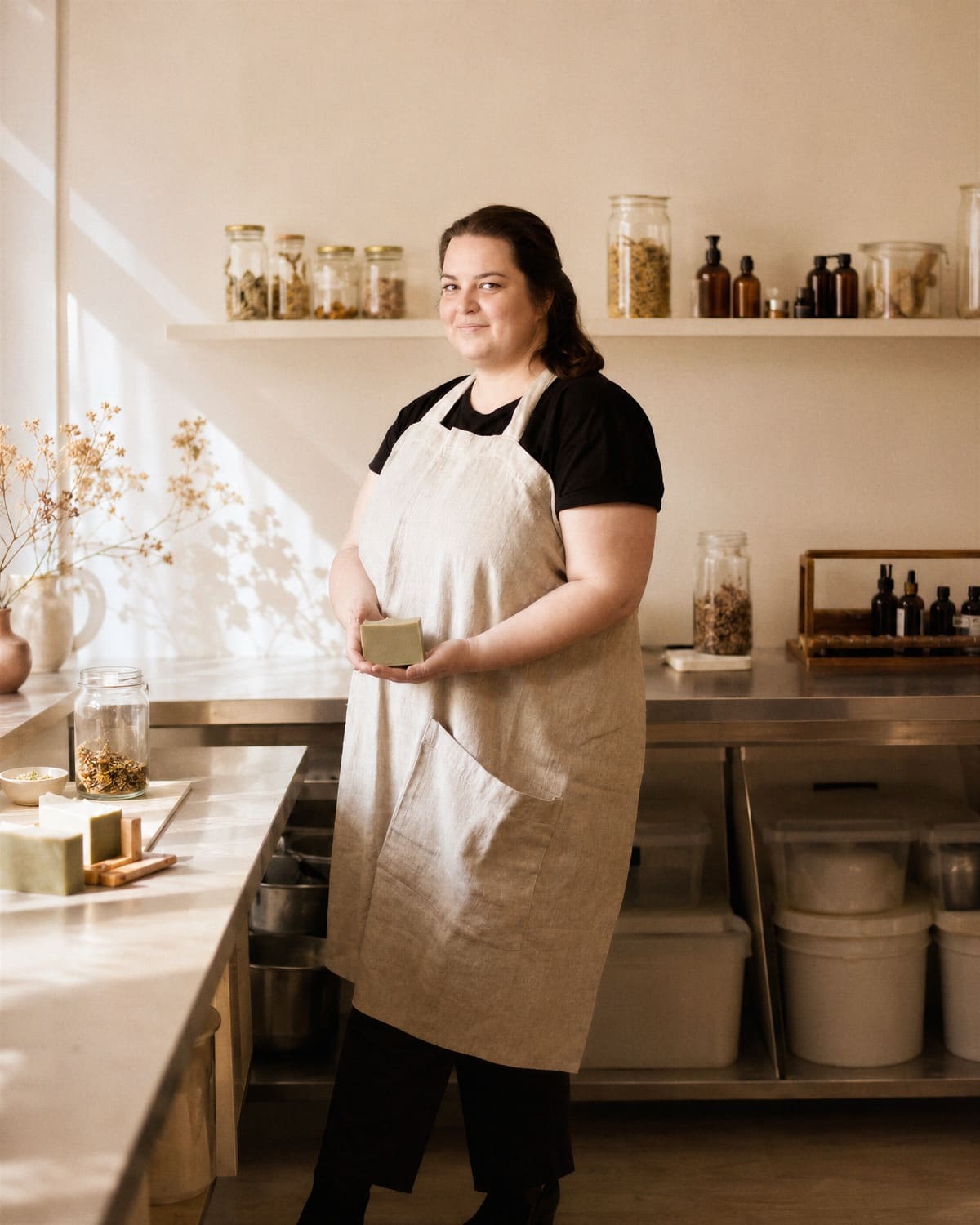
Soap that has never seen a soap workshop.
A large proportion of industrial bar soap today isn't made by a manufacturer who starts with oils, fats and sodium hydroxide. The base tends to be ready-made soap in the form of noodles or granules, known in the trade as soap noodles. It's an industrially produced semi-finished product that is bought in large volumes and then further processed, fragranced, coloured, homogenised and pressed into the desired shape.
It's fast, efficient and makes it possible to produce huge numbers of practically identical bars at a low price.
There's nothing illegitimate about it. It's simply industry. It does mean, though, that the brand on the box may not be the one that created the soap base itself. Its composition and properties may have been decided by the maker of the semi-finished product long before it got its final scent, colour and logo.
With handmade soap, we start at the opposite end. Not with a ready-made soap base, but with individual raw materials.
Where the glycerine can go missing during production.
When fats or oils react with sodium hydroxide, the result is soap and, at the same time, glycerine. So it isn't something we have to add to the soap afterwards — it forms naturally during saponification.
Glycerine is a humectant, meaning a substance able to bind water, and that is exactly why it's a valuable raw material for the cosmetics and pharmaceutical industries. In some industrial production methods it can be separated from the soap mass, purified and sold on as a raw material in its own right.
In cold-process soap, the glycerine stays where it formed — in the finished bar.
It's one of the differences you can't see, but it follows directly from the way the soap is made.
The cold process: from oils to a finished bar.
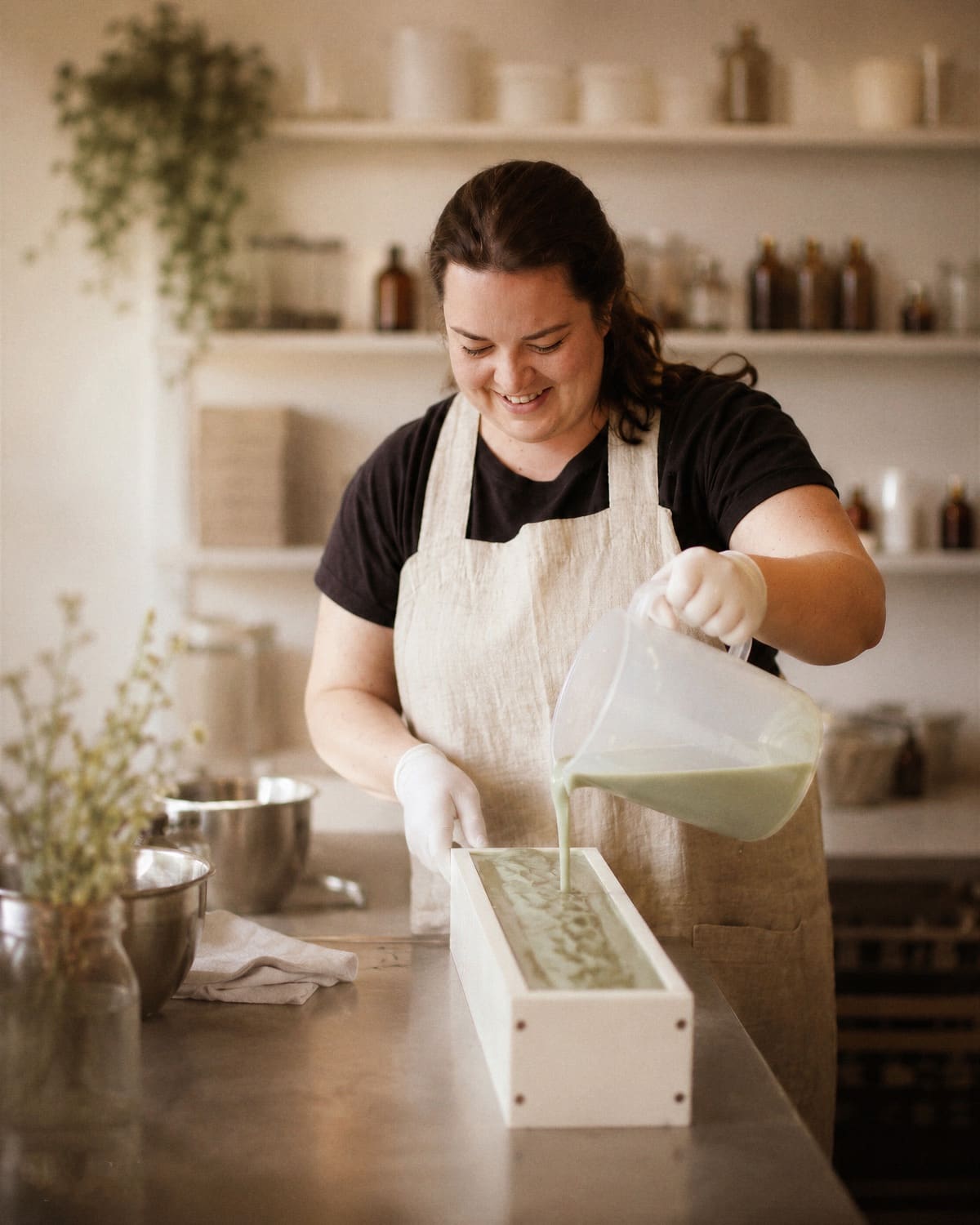
We make our soaps using the cold process. We start with individual oils and fats, which we weigh out according to the recipe and combine with a sodium hydroxide solution. Saponification begins.
Depending on the specific recipe, we add further ingredients to the soap mass, create its pattern and pour it into moulds. Once it has set, we take it out, cut it into individual bars and stamp each one.
And it still isn't finished.
Fresh soap doesn't go straight into a box. It goes onto a shelf, where it cures for several weeks. It gradually loses water and hardens, and its properties settle.
This step can't be skipped with a new logo, a nicer box or an impatient glance at the calendar. While an industrial line turns out more pallets, our soaps sit on the shelves waiting until they're ready.
After curing, we pick up every bar again. We check it, weigh it and reject any bars that don't meet our standards. Only then does the soap get its packaging and move on.
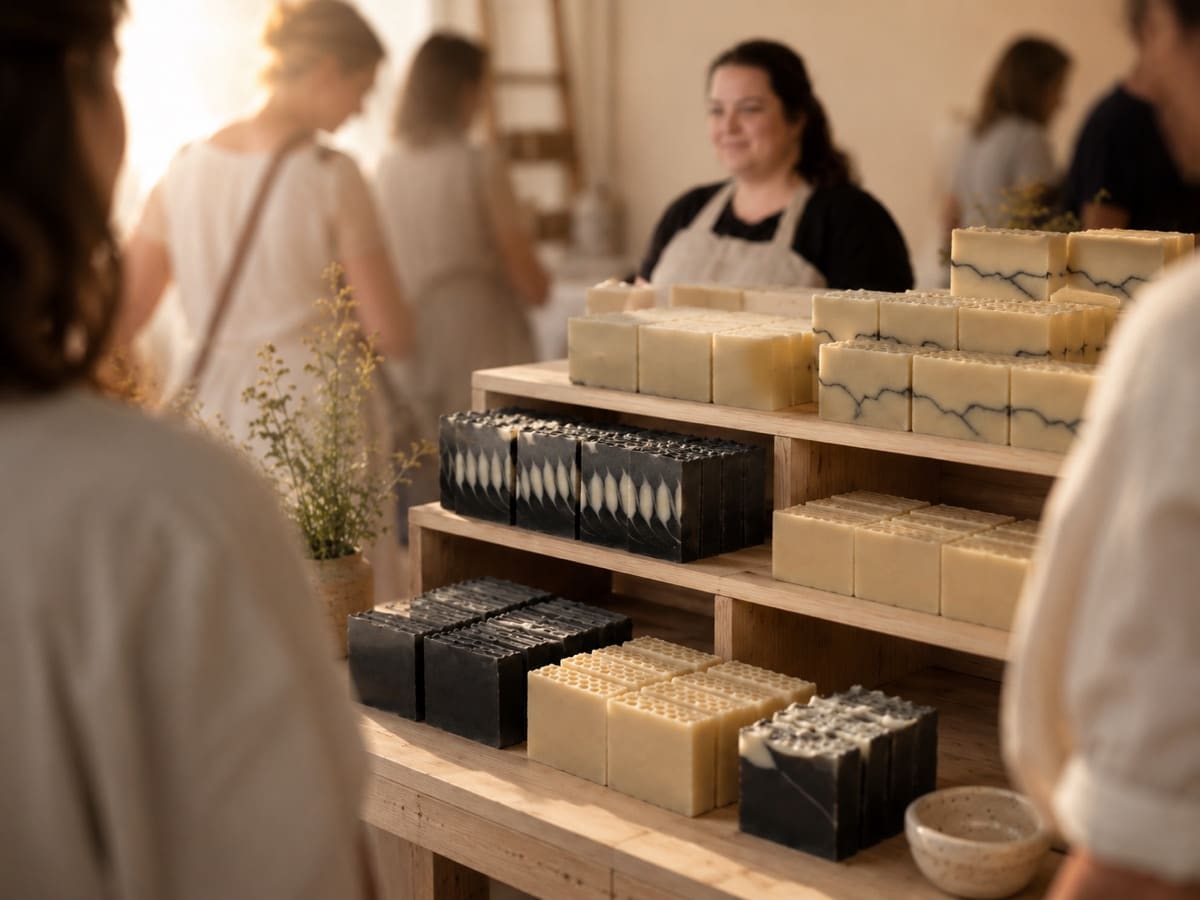
Every bar is a little different. We say so on purpose.
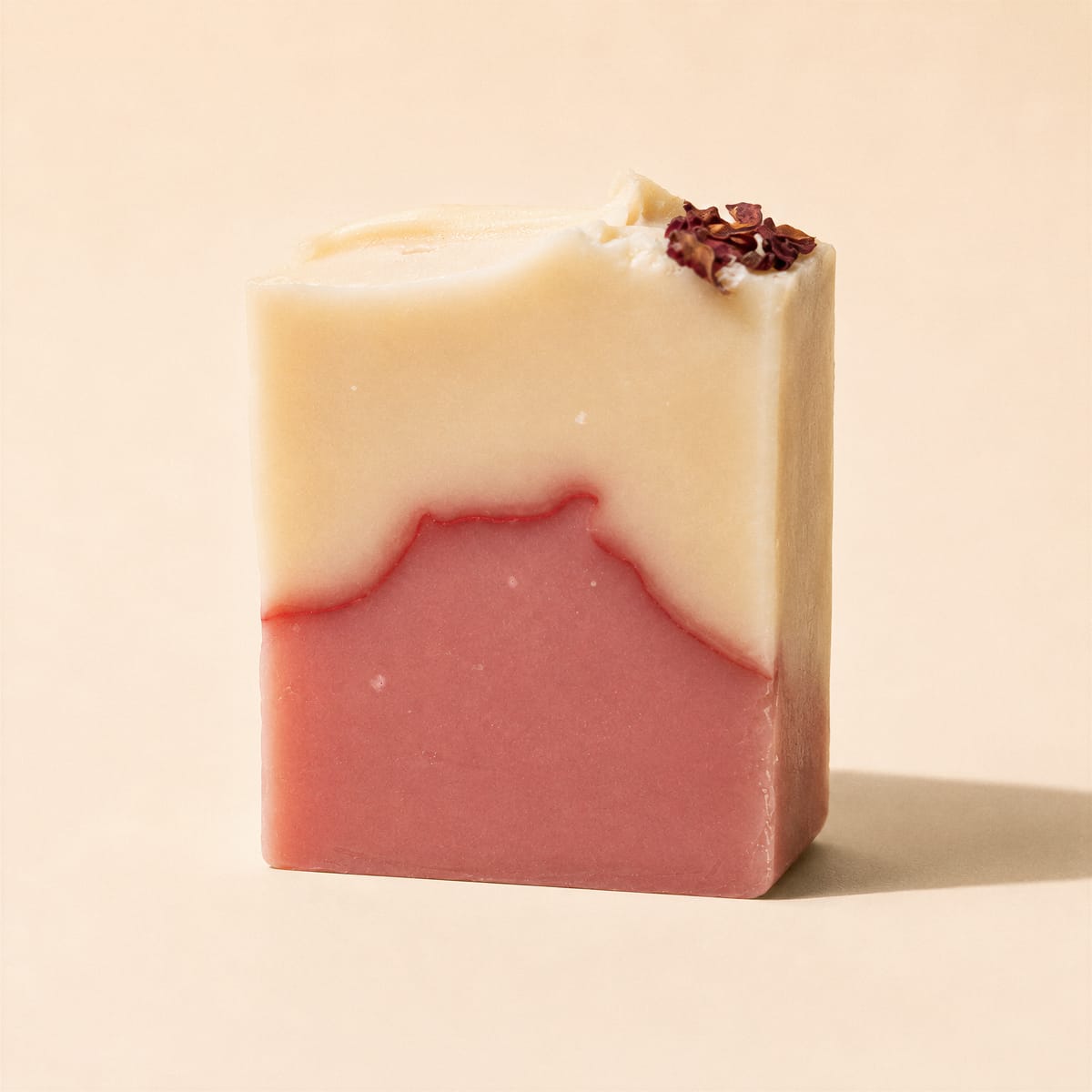
We pour, marble, cut and stamp our soaps by hand. That's why two bars from the same batch may not look exactly the same. The pattern, the distribution of colours, the cut or the surface can vary slightly.
For an automated line, a deviation like that would be a problem. When soap is made by hand, it's a natural consequence of the process.
It doesn't mean every bar has a different recipe. It just means it wasn't stamped out by a press set up to produce a perfect copy of the previous bar every second.
So what are you actually paying for?
The price of handmade soap isn't a mark-up for a romantic idea of craft. It's made up of very specific things.
We start with individual raw materials and make the soap from scratch. In cold-process production, the naturally formed glycerine stays in it. Every batch goes through a whole series of manual steps, from weighing the raw materials through pouring, cutting and stamping to the final check, weighing and packing. In the meantime, the soap takes up space on the shelves for several weeks while it cures.
Large-scale production can spread these costs across hundreds of thousands of identical bars. A small soap workshop can't.
We've been making our soaps in Prievidza since 2015. We know what's in every bar because we made it ourselves, from the first raw material.
That's actually a large part of the difference in price.
Does more expensive automatically mean better?
No.
A higher price on its own is no guarantee of good soap, and the word “handmade” in itself says nothing about the quality of the recipe. Equally, it wouldn't be fair to claim that every industrially made soap is bad.
The difference lies above all in the way it's made. With handmade cold-process soap, the price reflects the raw materials used, small production batches, a lot of manual work and several weeks of curing. In large-scale production, the economics work completely differently.
That's why it makes more sense to look at the ingredients and the way a soap is made than at the word “handmade” alone.
And time is one of the raw materials in soap making that nobody has started selling wholesale yet.
Frequently asked questions.
Why is handmade soap more expensive than ordinary toilet soap?
Handmade cold-process soap is made directly from oils, fats and other raw materials, is produced in small batches and cures for several weeks before it goes on sale. On top of that, every bar goes through several manual steps, including cutting, stamping, checking, weighing and packing. Large-scale production works with completely different volumes and levels of automation, which allows it to bring the price of a single bar down considerably.
What is glycerine and why is it in handmade soap?
Glycerine forms naturally during the saponification of fats and oils and is a humectant, meaning a substance able to bind water. In some industrial production methods it can be separated from the soap mass and processed further as a raw material in its own right. In the traditional cold process, the naturally formed glycerine remains part of the finished soap.
What does cold process mean in soap making?
The cold process is a production method in which oils and fats are combined with a sodium hydroxide solution and saponification takes place. The soap mass is poured into a mould, sets and is cut, and the finished bars then cure for several weeks.
Why does handmade soap have to cure?
Fresh soap contains more water. During curing, the water gradually evaporates, the soap hardens and its properties settle. A well-cured bar is harder and, used properly, generally wears down more slowly.
How long does handmade soap last?
It depends on the size of the bar, how often it's used and above all on what happens to it between uses. Bar soap doesn't do well sitting in water, so keep it on a soap dish that lets water drain away and where the soap can dry out properly.
The difference isn't only on the price tag.
Cheap industrial soap isn't necessarily bad just because it's cheap. Its price is made possible by a different way of making it — large volumes, standardised semi-finished products, automation and speed.
We chose a different path. We start with individual raw materials, make the soap from scratch, work it by hand and then give it several weeks during which it mainly needs one thing from us: to be left alone.
That's why handmade soap costs more. Not because the word “handmade” looks good on the packaging, but because there's more work and time behind every finished bar.
To lather is human. Knowing what you're paying for is human too.

To lather is human. So is subscribing.
New recipes, myths from the soapery and market dates. We only write when we have something to say.